Categories: Ants, Home Protection Plan, Pest Control
Read time: 6 minutes
When you think of signs of ants, you might think of trails of workers marching across your counter. There are a few different clues that ants have taken up residency in your home, and today, we’re going to talk about one clue that is often overlooked: ant droppings. For homeowners, learning to recognize ant poop, especially carpenter ant droppings, can help you figure out what you’re really dealing with in your home.
General Appearance of Ant Droppings
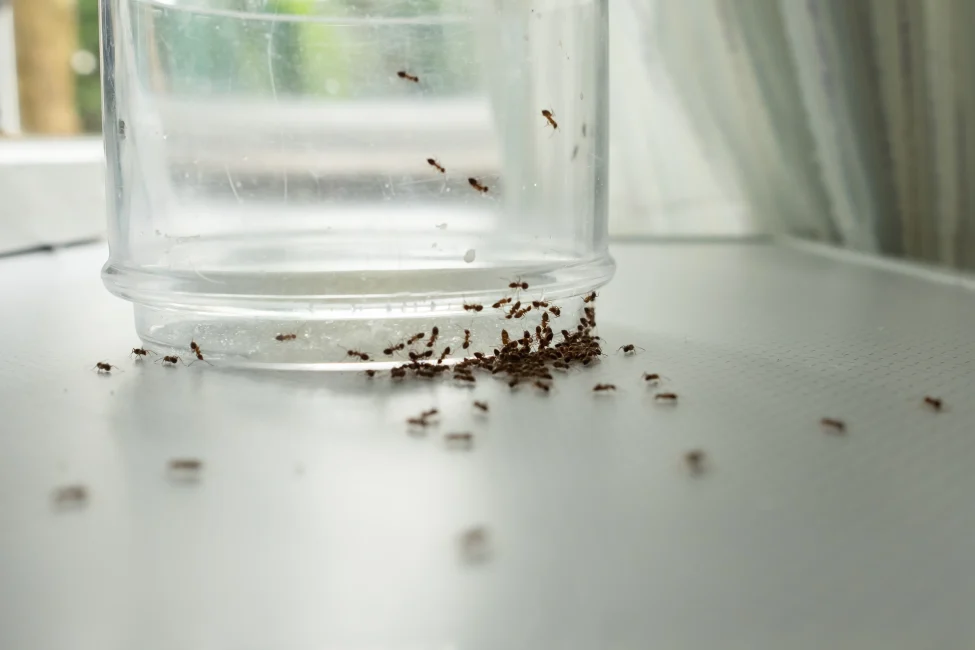
Ant droppings are tiny and usually blend into the background. To the untrained eye, they look like:
- Small, dark pellets or specks
- A little larger than grains of sand
- Sometimes mixed with food crumbs or insect parts
Different ant species leave slightly different droppings, but carpenter ants have a very distinct calling card.
Carpenter Ant Poop Characteristics
Carpenter ants don’t just leave behind ordinary poop. Because they carve tunnels through wood to build their nests, what they expel is a messy mixture called frass. Instead of clean pellets, carpenter ant droppings often include:
- Fine sawdust or wood shavings are created as they chew through beams, flooring, or trim.
- Ant body parts or insect fragments from food sources they’ve carried into the colony.
- Small, dark droppings that look a lot like coarse coffee grounds or pepper flakes.
This combination gives carpenter ant frass a gritty, irregular look that sets it apart from the neat, uniform pellets left by termites. Homeowners often find frass swept into small piles near the ants’ exit holes. Common spots include baseboards, window sills, attics, crawlspaces, or around wooden beams.
Because the piles are dry and crumbly, they’re easy to mistake for ordinary household dust, insulation debris, or even leftover sawdust from a home project. But if the piles keep reappearing in the same place—even after cleaning—that’s a strong sign of carpenter ant activity inside the wood.
Ant Droppings vs. Termite Droppings
One of the most common homeowner questions is: Are these ant droppings or termite droppings?
Here’s the difference:
- Ant droppings (frass): Look messy, with a mix of sawdust, insect parts, and bits of debris.
- Termite droppings (pellets): Look neat and uniform, like tiny, hard, six-sided grains of sand.
Carpenter Ant Droppings vs. Termite Droppings Side by Side
- Carpenter ant droppings: Irregular, powdery piles with wood dust and fragments.
- Termite droppings: Consistent pellet shapes, often forming small mounds at entry points.
Think of it this way: ants are messy builders, while termites are tidy eaters.
Ant Droppings vs. Termite Frass (Wood Shavings Confusion)
A big source of confusion comes from how carpenter ant frass looks at first glance. Many homeowners assume the piles are nothing more than sawdust left behind from construction or even normal wood settling. The truth is, carpenter ant droppings are far from plain shavings.
Frass often includes:
- Sawdust-like particles from the wood they’ve chewed through
- Insect fragments and ant parts from food dragged back to the nest
- Pepper-like droppings that give the pile a darker, speckled look
Carpenter ants are actually pretty neat inside their nests. They push this waste out through small holes, leaving behind tidy, cone-shaped piles on the floor or windowsill below. That deliberate placement is one of the biggest giveaways that you’re not just dealing with random dust.
Termite droppings can add to the confusion. Termites also leave behind frass, but theirs is made up of tiny, hard, uniform pellets — not the irregular, mixed texture of carpenter ant debris.
If you’ve cleaned up “sawdust” more than once in the same spot and it keeps coming back, chances are good it’s carpenter ant frass being pushed out of active tunnels, not leftover dust from a past project.
Ant Poop vs. Mouse Droppings
Because they’re small and dark, ant droppings can also be mistaken for mouse droppings. A quick comparison:
- Mouse droppings: Larger, about 1/8 inch long, with pointed ends.
- Ant droppings: Much finer, like coffee grounds or sawdust, and often piled rather than scattered
Where to Find Ant Droppings in Your Home
Ant droppings don’t just appear randomly — they usually show up close to where the ants live or travel. Knowing where to look can help you spot an infestation earlier.
Carpenter Ant Droppings
Because carpenter ants tunnel through wood to create galleries, their frass piles usually collect right outside those hidden nests. You might notice them:
- Along baseboards or window frames, where ants have made small exit holes.
- In attics, crawlspaces, or wall voids, especially near wooden joists and beams.
- Around decks, porches, or wooden support posts, where moisture-damaged wood is a common target.
- Near small cracks or crevices in drywall, as ants push frass out into living spaces.
Carpenter ant frass is often found in the same spot repeatedly. If you clean it up and it comes back, that’s a sign there’s an active nest inside the structure.
Other Ant Droppings
Other ant species don’t tunnel through wood, but they still leave behind waste along their foraging trails and nesting sites. Their droppings tend to be smaller and less noticeable, but you may find them:
- Behind kitchen appliances or under sinks, where ants forage for food and water.
- Inside cabinets or pantries, especially near sugary spills or food packaging.
- Along floorboards and wall edges, where ants often travel in straight lines.
- In basements or garages, where ants nest in soil, insulation, or cluttered storage areas.
While carpenter ant frass is easier to spot because of its sawdust-like texture, droppings from other ants may look more like fine pepper flakes or dirt specks gathered along foraging routes.
Ant Poop Pictures and Visual Guide
Because droppings are easily mistaken for dirt or sawdust, visual comparison is helpful. If you’re unsure, search for “ant poop images” online or take a close photo of what you’ve found. This can also help a pest control professional identify the problem faster.
What To Do If You Find Ant Droppings
Finding piles of carpenter ant frass indoors usually means ants are tunneling inside your walls or wooden structures. Here are quick steps to take:
- Don’t sweep the piles away without noting where they appeared. Location is a clue.
- Check nearby wood for soft spots or tiny exit holes.
- Monitor for live ant activity, especially large black ants at night.
How Fox Pest Control Can Help
Carpenter ants don’t eat wood like termites, but their tunneling can still cause costly structural issues if left alone. If you’re spotting droppings and aren’t sure whether they’re from ants, termites, or something else, Fox Pest Control can help.
Our team will:
- Inspect your home to confirm the source of the droppings
- Identify whether you’re dealing with ants, termites, or rodents
- Create a treatment plan to address the problem and help you feel safe and comfortable in your home
You don’t have to play guessing games with piles of frass or worry about hidden damage. With Fox Pest Control, you get experienced technicians and proven methods tailored to your home.
When to Call a Pest Control Professional
If you’ve found carpenter ant droppings inside, it’s a sign the problem is active. That’s the right time to call in help before the damage spreads. Contact Fox Pest Control today to schedule a professional assessment and get peace of mind that your home is being looked after.