Free Inspections & EstimatesSame Day Service

Get Hornet Control Near You

Hush the hornets.

Feel comfortable in your home. Let Fox Pest Control take care of your hornet problem.

Same Day Service

Free Inspections & Estimates

Satisfaction Guaranteed

Fox Pest Control technician inspecting kitchen for pests

Fox techs are experts at evicting your tiny tenants.

To ensure our customers’ safety, all Fox Pest Control technicians undergo a thorough screening process and complete extensive classroom training, along with ongoing on-the-job mentoring with an experienced technician.

The easiest way to get rid of hornets.

Dealing with aggressive hornets? Let Fox Pest Control handle the job! We’re experts in hornet control and have the tools to safely eliminate these stinging pests. With our trusted services, you can feel confident knowing your home and family are protected. Plus, our Home Protection Plan keeps your property hornet-free all season long.

1

Schedule with Fox

Call Fox Pest Control today for a free inspection: (855) 953-1976.
Call before 2 pm and get same-day service.

Remote locations and other conditions may require next-day service.

2

Treatment

A certified technician will inspect your property and provide customized pest control treatment based on their findings.

3

Follow Up

Each service provides a detailed report and helpful tips to keep pests away. We return regularly throughout the year, increasing protection with every visit.

Hamilton Allen Ph.D., BCE

Certified Entomologist, Fox Pest Control

Hornet Facts


Size: ⅝ – 1 ½ inches
Number of legs: 6
Wings: 2 pairs
Bites or stings: yes
Color: black, with yellow or white
Carry disease: no
Damages home/yard: no
Most active season: spring & early summer
Fox plan for this pest: Home Protection Plan

What do hornets look like?

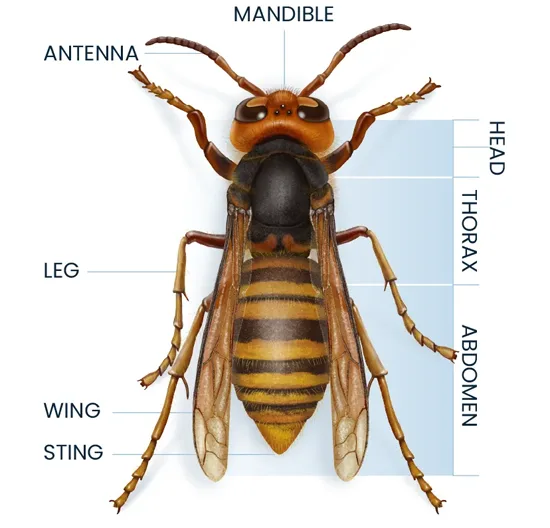
Hornet Anatomy Diagram

Hornets are a type of large wasp.

They belonging to the genus Vespa, which is part of the family Vespidae. Hornets are known for their aggressive behavior when their nest is threatened, and they have a powerful sting that can cause painful reactions in humans.

Hornets construct their nests from a papery material they produce by chewing wood fibers mixed with saliva.

These nests are often found in trees, bushes, eaves of buildings, attics, or underground. Unlike some other social wasps, hornets typically build their nests higher off the ground.

Hornets primarily eat other insects, which they capture and feed to their larvae.

They are beneficial predators, helping to control populations of pests like flies, caterpillars, and other insects.

Some of the most well-known species of hornets include the European hornet, the Asian giant hornet, and the bald-faced hornet.

While they play important roles in ecosystems as predators, their aggressive nature and painful stings can make them a nuisance and a hazard to humans, particularly if their nests are near human dwellings.

Hornets are social insects, meaning they live in colonies.

Colonies have a structured hierarchy consisting of a queen, workers, and sometimes drones (males). Together, these roles help the colony grow and stay strong.

Pests that can be confused with hornets.

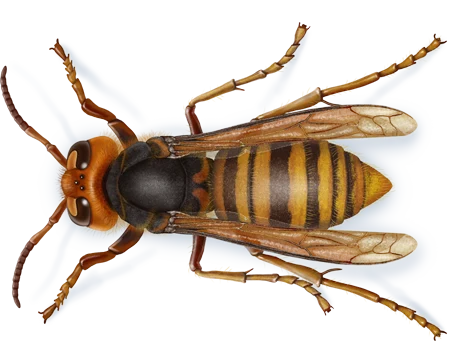
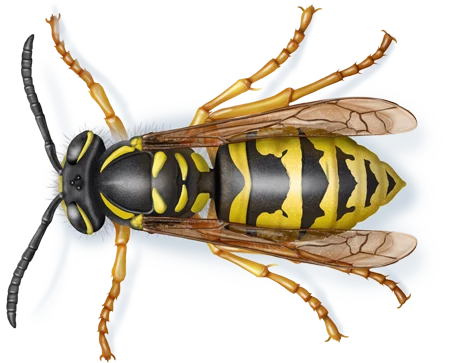
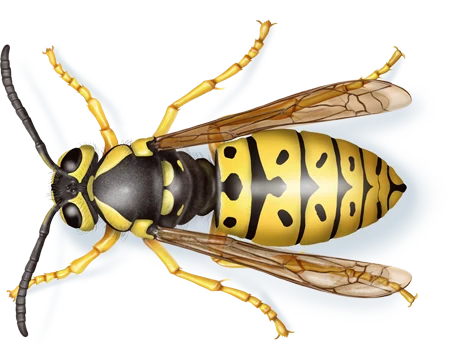
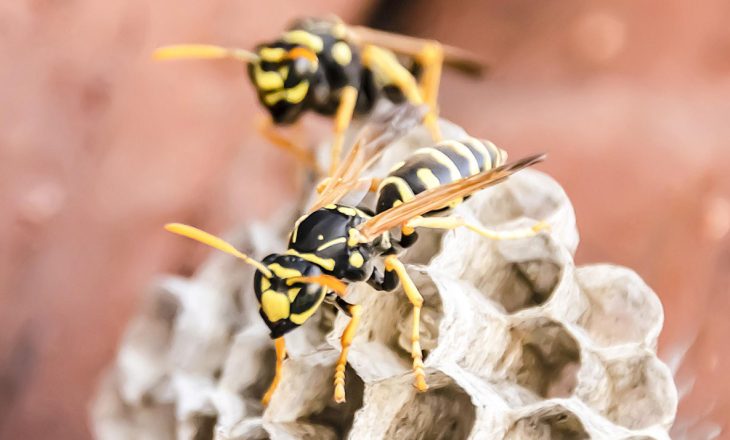
Hornets are often confused with other stinging insects such as wasps and yellowjackets.

Hornet

Wasp

Yellowjacket

You might already know for sure that you have an hornet problem. Here are a couple of the most common signs of an infestation.

Seeing more hornets than usual around your property is a clear sign of an infestation. Hornets are active during the day, so you may see them flying in and out of their nest or foraging for food, such as insects, tree sap, or nectar.

Hornets typically nest under overhangs, trees, bushes, attics, and eaves. It’s a strong sign of infestation.

The buzzing sound of hornets flying around their nest or within proximity is another sign of their presence.

In some cases, hornets may cause damage to plants or trees while foraging for materials or building their nests. Look for signs of foliage damage or bark stripping.

If you find an unusual number of dead insects around your property, it could be due to hornets preying on them.

Hornets can become aggressive if threatened, especially near their nest. If you notice hornets showing aggressive behavior towards humans or pets, it’s a sign that there may be a nearby nest.

Seal entry points

Avoid nest disturbance

Maintain landscaping

Dispose of garbage properly

Keep outdoor food/drinks covered

Use wasp traps

People like us.
Pests don't.

4.72 Average | 45,000+ Reviews

Bryan A.

I could not be more pleased with our initial home treatment today! Vincent arrived on time and was extremely thorough in his explanation of the services he performed. He was very polite, respectful of our inside spaces, and had a great attitude throughout the visit. A++ professional! Thank you!

Kayla B.

Overall - very satisfied with communication and job done for my first time ever hiring pest control. Very knowledgeable and explains everything. Makes it very easy to maintain for a super busy family like ours.

Fox Guarantee: We Come Back for Free!

    What type of property do you need help with?

    Are you a current customer?


    By clicking the checkbox, I am providing my eSign signature and consent to Fox Pest Control contacting me at the number above for marketing purposes including through the use of automated technology, SMS/MMS messages, and prerecorded and/or artificial voice messages (including AI generated messaging).  I acknowledge my consent is not required to purchase and I can connect with Fox Pest Control without providing consent by calling 833-667-3785. Message frequency may vary, and message & data rates may apply. Reply 'STOP' to unsubscribe. Reply 'HELP' for help. I also agree to the Fox Pest Control Privacy Policy and Terms of Use.

    Fox Pest Control technician talking to female customer

    Hornet FAQs

    How do I get rid of hornet’s nest?

    Removing a hornet’s nest can be dangerous because hornets can become aggressive and sting in defense of their nest. At Fox Pest Control, we have the necessary training, protective gear, and equipment to safely remove nests without the risk of stings. Give us a call today!

    What do hornets eat?

    Hornets are carnivores, which means they eat other insects. They like to feast on flies, caterpillars, and even other bees and wasps. Sometimes they also eat tree sap and fruit juices for energy.

    Do hornets make honey?

    No, hornets don’t make honey like bees do. Bees collect nectar from flowers and turn it into honey, which they store in honeycombs in their hives. Hornets don’t make honeycombs or store honey. Instead, they focus on catching prey to feed themselves and their young.

    What does a hornet’s nest look like?

    A hornet’s nest looks like a round, papery structure made from chewed-up wood fibers. It can be gray or brown in color and may be found hanging from tree branches, tucked into bushes, or attached to buildings or structures. Inside the nest, there are chambers where the queen lays eggs, and worker hornets care for the developing larvae.

    What is the difference between hornets and wasps?

    While hornets and wasps belong to the same family, there are some differences between them:

    • Hornets are generally larger than most wasps.
    • Hornets often have black and yellow stripes on their bodies, while wasps can be various colors, including black, yellow, and brown.
    • Hornets tend to build their nests higher off the ground, while wasps may build nests in a variety of locations, including underground or in wall voids.
    • Hornets are generally less aggressive than some species of wasps, but they will sting if they feel threatened.

    Are hornets dangerous?

    Hornets can be dangerous if they feel threatened or if their nest is disturbed. They have a powerful sting that can be painful and cause allergic reactions in some people. However, hornets usually only sting when they perceive a threat, so it’s important to stay calm and avoid disturbing their nests to prevent getting stung.

    Can hornets sting multiple times?

    Unlike bees, hornets can sting multiple times without dying. This is because their stingers are not barbed like those of bees. Hornets can deliver repeated stings if they feel threatened or if they perceive a danger to their nest. If you’re concerned about a hornet’s nest on your property, give us a call today. We have the expertise to take care of hornets safely.

    Do hornets pollinate plants?

    Hornets are not significant pollinators like bees. While they may inadvertently transfer some pollen as they move from flower to flower in search of food, their primary diet consists of other insects rather than nectar. Therefore, hornets do not play a major role in plant pollination compared to bees and other pollinating insects.

    What is an Asian giant hornet — aka, “murder hornet”?

    The Asian giant hornet, also known as the “murder hornet,” is a large species of hornet native to parts of Asia. It gained attention due to its size (up to 2 inches long) and aggressive behavior. Asian giant hornets are known for their potent sting, which can be very painful and even deadly in some cases, particularly for individuals who are allergic to their venom.

    Are murder hornets dangerous?

    Yes, murder hornets can be dangerous, especially if encountered in large numbers or if their nest is disturbed. Their venom is powerful and can cause severe reactions in humans, including pain, swelling, and in rare cases, even death. However, it’s essential to note that encounters with murder hornets are relatively rare, and they generally prefer to avoid human interaction unless provoked.

    Where in the US are Asian giant hornets found?

    Asian giant hornets have been found in the Pacific Northwest region of the United States. Specifically, they have been sighted in Washington State and sporadically in neighboring areas of Oregon and British Columbia, Canada. These sightings have led to concern about the potential establishment of Asian giant hornets in North America and efforts to monitor and control their spread. Local authorities and entomologists are actively monitoring their presence and taking measures to manage any populations that are found.