Free Inspections & EstimatesSame Day Service

Get Carpenter Bee Control Near You

Drill down on carpenter bees.

Feel comfortable in your home. Let Fox Pest Control take care of your carpenter bee problem.

Same Day Service

Free Inspections & Estimates

Satisfaction Guaranteed

Fox Pest Control technician inspecting kitchen for pests

Fox techs are experts at evicting your tiny tenants.

To ensure our customers’ safety, all Fox Pest Control technicians undergo a thorough screening process and complete extensive classroom training, along with ongoing on-the-job mentoring with an experienced technician.

The easiest way to get rid of carpenter bees.

Got carpenter bees drilling into your wood? The best way to stop them is to call Fox Pest Control! We specialize in carpenter bee removal and carpenter bee extermination, and we know how to protect your home from their damaging habits. With our expert services, you can trust us to protect your property from these buzzing nuisances. Our Home Protection Plan provides year-round coverage, so you can be sure you’re protected year-round. We’re so sure we can solve your carpenter bee problem that we guarantee your satisfaction. If they return, we’ll be back to fix it, free of charge!

1

Schedule with Fox

Call Fox Pest Control today for a free inspection: (855) 953-1976.
Call before 2 pm and get same-day service.

Remote locations and other conditions may require next-day service.

2

Treatment

A certified technician will inspect your property and provide customized pest control treatment based on their findings.

3

Follow Up

Each service provides a detailed report and helpful tips to keep pests away. We return regularly throughout the year, increasing protection with every visit.

Hamilton Allen Ph.D., BCE

Certified Entomologist, Fox Pest Control

Carpenter Bee Facts


Size: ½ – 1-inch
Number of legs: 6
Wings: 2 pairs
Bites or stings: yes
Color: black with yellow
Carry disease: no
Damages home/yard: yes
Most active season: spring
Fox plan for this pest: Home Protection Plan

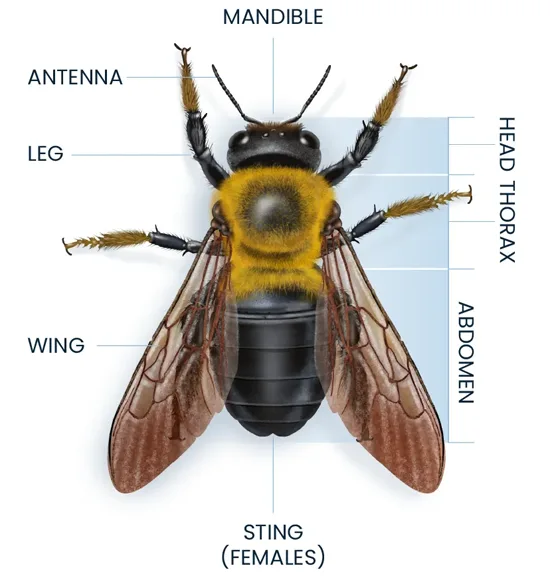
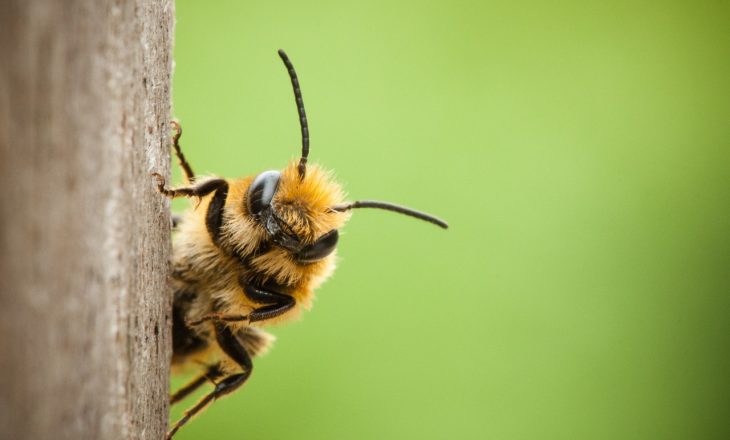
What do carpenter bees look like?

Carpenter Bee Anatomy Diagram

Unlike termites, carpenter bees don’t eat wood;

They bore through it. Carpenter bees chew perfectly round holes to create tunnels, or galleries, used for storing food, protection, and for laying eggs. These tunnels can be up to 10 feet long!

Unlike honeybees, carpenter bees are solitary insects.

Each female carpenter bee creates her own nest instead of living in a hive with other bees.

Carpenter bees are excellent pollinators, visiting various flowers to collect nectar and pollen.

Their buzzing vibrations help release pollen, aiding in the pollination of many plant species.

Carpenter bees are skilled woodworkers.

Female carpenter bees use their strong mandibles to chew through wood, creating tunnels for their nests. They often prefer softwoods like pine, cedar, or redwood.

Male and female carpenter bees have different roles.

Females are like carpenters; they make nests by drilling holes in wood. Males, on the other hand, act as guards and are very territorial. They protect the nests, even though they can’t sting. They’re bigger and can be aggressive to keep intruders away. Female carpenter bees don’t sting often, but if they do, it hurts.

For detailed information on carpenter bees—their nesting behavior, potential for damage, and control options—visit our Carpenter Bees Pest Files for expert insights.


Pests that can be confused with carpenter bees.

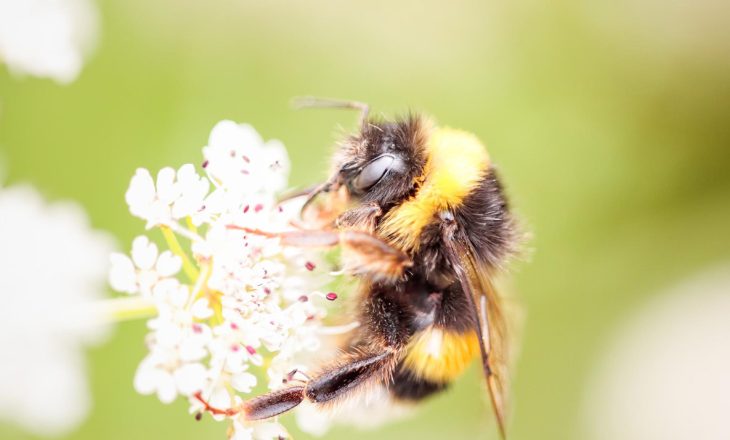
People often confuse bumble bees with carpenter bees. However, carpenter bees’ abdomens are mostly bare, black, and shiny, while bumble bees are fuzzy with yellow and black. Carpenter bees are also larger than bumble bees.

You might already know for sure that you have an carpenter bee problem. Here are a couple of the most common signs of carpenter bee infestation.

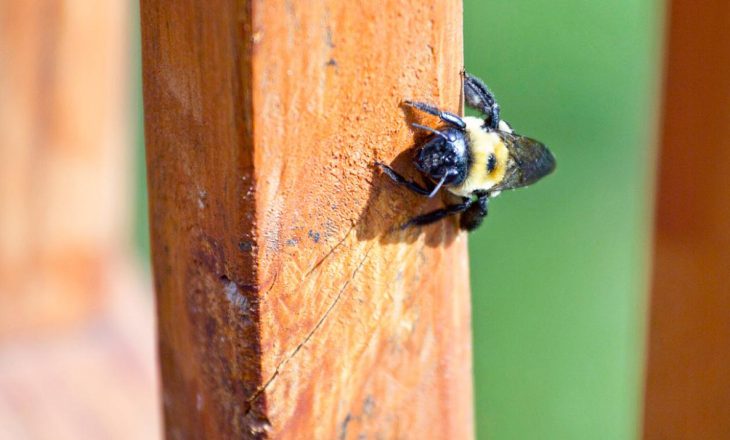
Carpenter bees bore into wood to create galleries to lay their eggs, which causes structural damage over time. Signs of entry holes on wooden decks and soffits may indicate carpenter bee presence.

You might notice small piles of sawdust beneath the entry holes. This is a result of the bees excavating galleries inside the wood.

You may see carpenter bees flying around their nesting sites area, particularly during the daytime. Male carpenter bees are often seen hovering around while females enter and exit the nesting holes.

Carpenter bees create brownish stains near their nests, which are actually from their waste. These stains are very difficult to remove and serve as another reason to address the nests and prevent future infestations.

Paint or stain raw wood

Fill and seal existing holes

Remove dead and decaying wood

Regular yard maintenance

People like us.
Pests don't.

4.72 Average | 45,000+ Reviews

Bryan A.

I could not be more pleased with our initial home treatment today! Vincent arrived on time and was extremely thorough in his explanation of the services he performed. He was very polite, respectful of our inside spaces, and had a great attitude throughout the visit. A++ professional! Thank you!

Kayla B.

Overall - very satisfied with communication and job done for my first time ever hiring pest control. Very knowledgeable and explains everything. Makes it very easy to maintain for a super busy family like ours.

Fox Guarantee: We Come Back for Free!

    What type of property do you need help with?

    Are you a current customer?


    By clicking the checkbox, I am providing my eSign signature and consent to Fox Pest Control contacting me at the number above for marketing purposes including through the use of automated technology, SMS/MMS messages, and prerecorded and/or artificial voice messages (including AI generated messaging).  I acknowledge my consent is not required to purchase and I can connect with Fox Pest Control without providing consent by calling 833-667-3785. Message frequency may vary, and message & data rates may apply. Reply 'STOP' to unsubscribe. Reply 'HELP' for help. I also agree to the Fox Pest Control Privacy Policy and Terms of Use.

    Fox Pest Control technician talking to female customer

    Carpenter Bee FAQs

    Are carpenter bees pollinators?

    Yes, carpenter bees are great pollinators. While they are known for their habit of tunneling into wood to create nests, carpenter bees also play an important role in pollination. When they visit flowers to collect nectar and pollen, they inadvertently transfer pollen from one flower to another, helping the reproductive process of many plant species. The buzzing vibrations generated by carpenter bees as they move from flower to flower also help release pollen, making them effective pollinators for various plants.

    Do carpenter bees make honey?

    No, carpenter bees do not make honey. Unlike honeybees, which are social insects that live in colonies and produce honey as a food source for their colony, carpenter bees are solitary insects. Carpenter bees do not produce honey or store large quantities of food like honeybees do. Instead, carpenter bees collect pollen and nectar from flowers to feed themselves and their offspring.

    Do carpenter bees sting?

    Only female carpenter bees can sting, and they don’t do it very often. Carpenter bees rarely sting unless the nest is threatened. Males can sometimes try to intimidate intruders by flying close to the face, but they don’t have a stinger and are completely harmless.

    Are carpenter bees aggressive?

    Carpenter bees are typically not aggressive, but male carpenter bees can become defensive when safeguarding their nests. It’s common for them to swoop down if you approach their nests too closely.