Free Inspections & EstimatesSame Day Service
Squash the spider scare.
Feel comfortable in your home. Let Fox Pest Control take care of your spider problem.
Same Day Service
Free Inspections & Estimates
Satisfaction Guaranteed

To ensure our customers’ safety, all Fox Pest Control technicians undergo a thorough screening process and complete extensive classroom training, along with ongoing on-the-job mentoring with an experienced technician.
Got spiders? The best way to get rid of them is to call Fox Pest Control! We specialize in spider control and know how to handle any spider infestation. You can trust us to protect your home and take care of the problem. Plus, our expert spider exterminator services and Home Protection Plan keep your home safe all year long. We’re confident that our spider solutions will do the trick. If they come back, so do we—at no charge to you!
Call Fox Pest Control today for a free inspection: (855) 953-1976.
Call before 2 pm and get same-day service.
Remote locations and other conditions may require next-day service.
A certified technician will inspect your property and provide customized pest control treatment based on their findings.
Each service provides a detailed report and helpful tips to keep pests away. We return regularly throughout the year, increasing protection with every visit.
Everything you never wanted to know about spiders.

Hamilton Allen Ph.D., BCE
Certified Entomologist, Fox Pest Control
Size: up to 3 inches
Number of legs: 8
Wings: no
Bites or stings: yes
Color: various
Carry disease: no
Damages home/yard: no
Most active season: year-round
Fox plan for this pest: Home Protection Plan


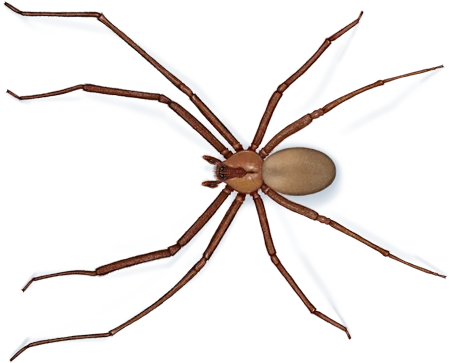
Brown Recluse

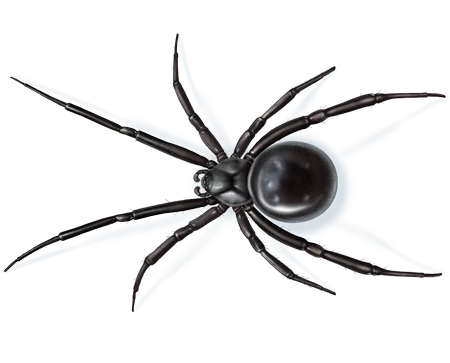
Black Widow

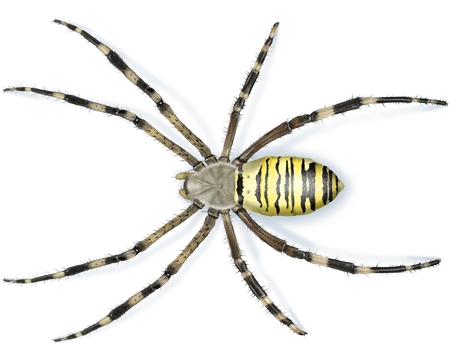
Orb Weaver

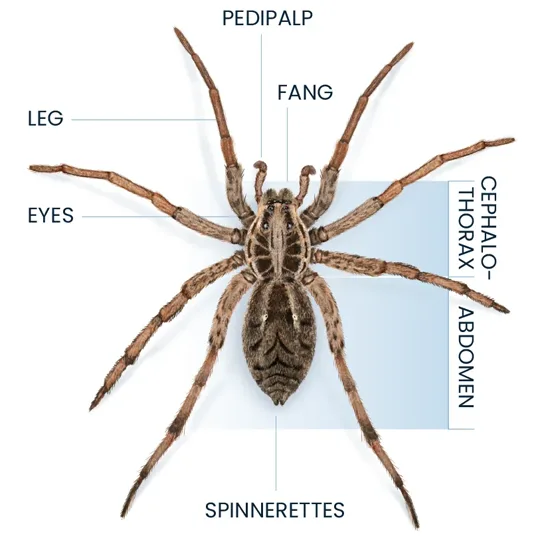
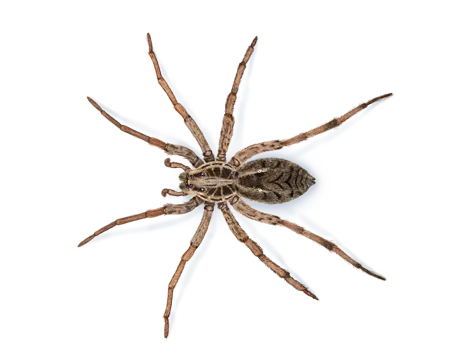
Wolf
Had it with spiders?
Call now and get $50 off pest control.
Call before 2pm and get same-day service.
They belong to a different group of animals called arachnids, which also include scorpions, ticks, and mites. One main difference between spiders and insects is the number of legs – spiders have eight legs, while insects have six.
Their eyes are arranged in various patterns on their head, and not all species use their eyes in the same way. Some have excellent vision and use their eyes to hunt, while others rely more on other senses like touch and vibration.
These legs help them move around, catch prey, and build webs. Their legs are covered in tiny hairs and equipped with specialized structures that help spiders grip onto surfaces and manipulate their environment.
Some spider species may only live for a few months, while others can survive for several years. Generally, female spiders tend to live longer than males.
Most spiders feed on insects like flies, mosquitoes, and ants. Some larger spiders may even eat small vertebrates like frogs or lizards. They catch their prey using various methods, including spinning webs, ambushing, or actively hunting down their victims.
In spiders, molting is the process of shedding their hard exoskeleton, which protects their bodies. After molting, spiders appear with a new, larger exoskeleton, which eventually hardens to provide support until the next molt. Molting is essential for spiders to grow larger and replace damaged body parts.
To better understand these eight-legged arachnids, visit our Spider Pest Files—a valuable resource detailing their behaviors, species commonly found in homes, and tips for safe and effective management.

Spider beetles are often confused with spiders because they have long legs and round abdomens. They’re insects, though, with only six legs. Harvestmen, sometimes known as Daddy longlegs, are also confused with spiders, and they are arachnids but are part of the Oplilione family. They do not spin webs, and they only have two eyes. Read more about Daddy Longlegs in the FAQs below.
You might already know for sure that you have an spider problem. Here are a couple of the most common signs of spider infestation.
Seeing spider webs inside and outside your home, especially in corners, ceilings, windowsills, and even inside exterior light fixtures, is a clear sign of spider activity.
If you notice spiders crawling around your home, particularly in higher numbers or more often, it could suggest an infestation.
Spider egg sacs are variable in shape, size, and color but are generally round and often found in hidden areas like corners, behind furniture, or in the attic or basement.
Like other arthropods, spiders molt as they grow, leaving behind their shed exoskeletons. Finding these skins around your home can indicate spider activity.
Spiders often leave remnants of their prey, such as insect carcasses or small insects caught in their webs.
Seal entry points
Clean regularly
Reduce clutter and clean frequently
Fix water leaks
Regularly clean up spider webs
Store food properly
4.72 Average | 45,000+ Reviews
We’re so sure you’ll love our service, we guarantee it. If you spot any pests included in your plan, just give us a call. We’ll come back until the pests don’t.
Send us a message using the form below, or just give us a call at (855) 953-1976.