Free Inspections & EstimatesSame Day Service

Get Vole Control Near You

Evict voles from your yard.

Feel comfortable in your home. Let Fox Pest Control take care of your vole problem.

Same Day Service

Free Inspections & Estimates

Satisfaction Guaranteed

Fox Pest Control technician inspecting kitchen for pests

Fox techs are experts at evicting your tiny tenants.

To ensure our customers’ safety, all Fox Pest Control technicians undergo a thorough screening process and complete extensive classroom training, along with ongoing on-the-job mentoring with an experienced technician.

The easiest way to get rid of voles.

Voles are tiny rodents that love to dig, creating both surface and underground tunnels in your yard. Their extensive tunnel systems can cause damage to your lawn, garden, and even crops. At Fox Pest Control, we know how to get rid of voles in your yard, so you can get back to enjoying the outdoors. Give us a call today to see if we offer vole services in your area. Plus, you can learn more about these interesting little rodents below!

1

Schedule with Fox

Call Fox Pest Control today for a free inspection: (855) 953-1976.
Call before 2 pm and get same-day service.

Remote locations and other conditions may require next-day service.

2

Treatment

A certified technician will inspect your property and provide customized pest control treatment based on their findings.

3

Follow Up

Each service provides a detailed report and helpful tips to keep pests away. We return regularly throughout the year, increasing protection with every visit.

Hamilton Allen Ph.D., BCE

Certified Entomologist, Fox Pest Control

Vole Facts


Size: 5-8 inches
Number of legs: 4
Wings: no
Bites or stings: no
Color: brown or gray
Carry disease: yes
Damages home/yard: yes
Most active season: year-round
Fox plan for this pest: Home Protection Plan/Specialty Plan

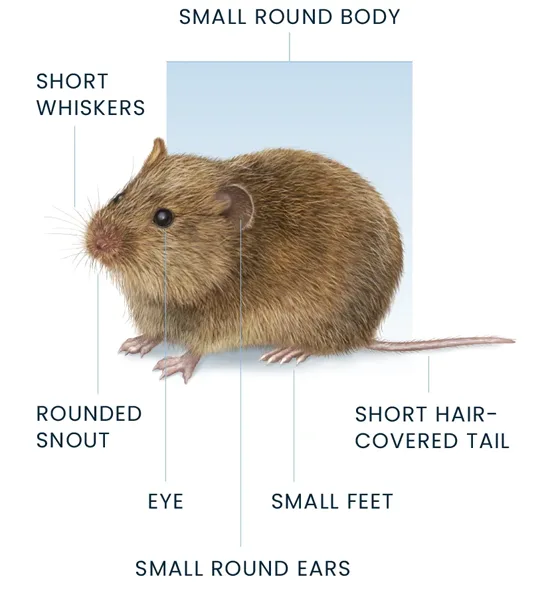
What do voles look like?

Vole Anatomy Diagram

Voles are known for their rapid reproduction rates.

A single female vole can have 1-5 litters each year, with each litter typically having 3-6 young voles, but sometimes as many as 11 babies! They can have a litter every 35-40 days.

Voles are herbivores, meaning they primarily eat plants.

They consume a wide variety of vegetation, including grasses, roots, bulbs, seeds, and crops like potatoes and carrots.

Voles are skilled diggers.

They create intricate surface and underground tunnel systems for nesting and foraging. These tunnels can extend for several feet and provide shelter from predators and harsh weather conditions.

Voles are an important food source for many predators.

These include owls, hawks, foxes, snakes, and even domestic cats. Their abundance and high reproductive rate make them a vital part of the food chain in many ecosystems.

Voles undergo seasonal changes in their fur color.

Some species sporting lighter coats in the winter for better camouflage in snow-covered environments.

For a deeper understanding of these burrowing rodents, visit our Vole Pest Files—a comprehensive resource detailing their habits, the damage they cause to landscapes, and effective methods for identification and control.


Pests that can be confused with voles.

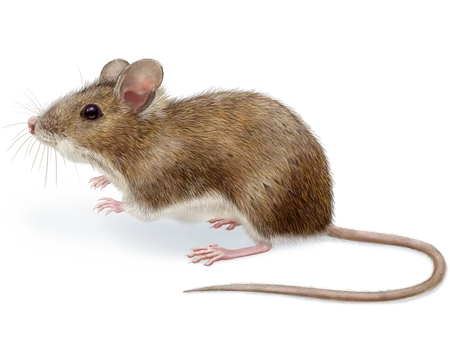
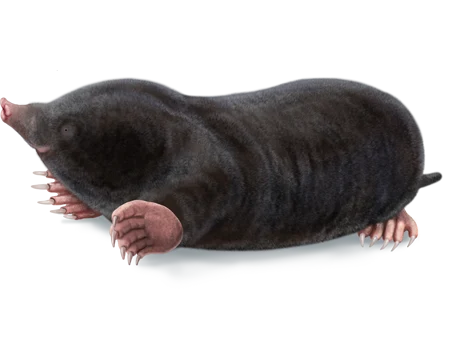
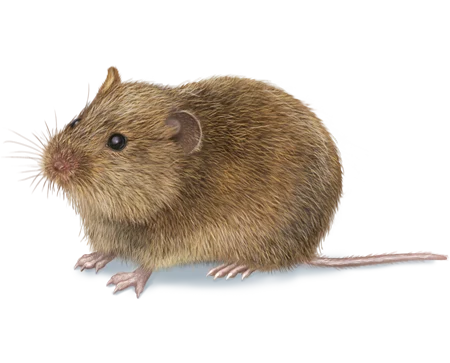
Voles are often mistaken for mice and are sometimes even called meadow mice, but they are different rodents. Sometimes, people mistake voles for moles, as well, but moles are not rodents and are much bigger.

Field Mouse

Mole

Vole

You might already know for sure that you have an vole problem. Here are a couple of the most common signs of vole infestation.

Voles create an extensive network of surface tunnels, which are visible, and underground tunnels, which can sometimes be detected by gently probing the soil with a stick or shovel.

Look for small, round openings in the ground, often hidden beneath vegetation or debris, which lead to the voles’ underground tunnels and nesting chambers.

Voles gnaw on the bark of trees, shrubs, and other plants near ground level, leaving distinct tooth marks that can cause damage to the vegetation.

Voles consume a variety of plants, so evidence of gnawed or damaged vegetation, including grasses, roots, bulbs, and garden crops, may indicate their presence.

Keep grass cut short

Encourage natural predators

Remove food sources

Regular yard maintenance

People like us.
Pests don't.

4.72 Average | 45,000+ Reviews

Bryan A.

I could not be more pleased with our initial home treatment today! Vincent arrived on time and was extremely thorough in his explanation of the services he performed. He was very polite, respectful of our inside spaces, and had a great attitude throughout the visit. A++ professional! Thank you!

Kayla B.

Overall - very satisfied with communication and job done for my first time ever hiring pest control. Very knowledgeable and explains everything. Makes it very easy to maintain for a super busy family like ours.

Fox Guarantee: We Come Back for Free!

    What type of property do you need help with?

    Are you a current customer?


    By clicking the checkbox, I am providing my eSign signature and consent to Fox Pest Control contacting me at the number above for marketing purposes including through the use of automated technology, SMS/MMS messages, and prerecorded and/or artificial voice messages (including AI generated messaging).  I acknowledge my consent is not required to purchase and I can connect with Fox Pest Control without providing consent by calling 833-667-3785. Message frequency may vary, and message & data rates may apply. Reply 'STOP' to unsubscribe. Reply 'HELP' for help. I also agree to the Fox Pest Control Privacy Policy and Terms of Use.

    Fox Pest Control technician talking to female customer

    Vole FAQs

    How does fox treat voles?

    Some pests are unique and require special Pest Control services. At Fox Pest Control, we offer specialty treatments for pest problems, such as bed bugs, moles, voles, and, in some areas, spotted lanternflies. For more information on how we can help you with your vole problem, call us today!

    How long do voles live?

    Voles typically have a lifespan of about 1 to 2 years in the wild, although this can vary depending on factors such as predation, food availability, and environmental conditions.

    Are voles dangerous?

    Voles are generally not considered dangerous to humans, but they can pose problems for agriculture and landscaping. Their extensive tunneling and feeding habits can damage crops, gardens, and ornamental plants, leading to economic losses for farmers and gardeners.

    Do voles bite?

    While voles are not aggressive towards humans and typically avoid interaction, they may bite if they feel threatened or cornered. However, instances of voles biting humans are rare, and their bites are generally not severe. Even though voles can carry diseases like tularemia and rabies, there is no documented case of a vole giving rabies to a human. These animals are not inclined to bite people.

    Do voles spread disease?

    Voles are not known to spread diseases to humans. However, because voles can carry infectious pathogens or parasites if you must handle them, wear rubber gloves.

    What’s the difference between voles and mice?

    The main differences between voles and mice are in their physical characteristics, particularly their tails. Voles have short tails, while mice have longer tails. Additionally, voles tend to have stockier bodies and smaller ears compared to mice. Mice enter homes, and voles will not.

    Voles and moles are both burrowing animals, but voles are rodents, and moles are not. In terms of appearance and behavior, there are significant differences between the two. Moles have large, shovel-like front feet with claws adapted for digging tunnels underground. In contrast, voles have smaller front feet and are more adapted for surface-level tunneling.

    Where do voles live?

    Voles inhabit a variety of environments throughout the United States, including grasslands, meadows, fields, forests, and gardens. They are versatile rodents that can thrive in diverse habitats if suitable food and shelter are available.