Free Inspections & EstimatesSame Day Service

Wasp Pest Control & Extermination Services Near You

Wave wasps goodbye.

Feel comfortable in your home. Let Fox Pest Control take care of your wasp problem.

Same Day Service

Free Inspections & Estimates

Satisfaction Guaranteed

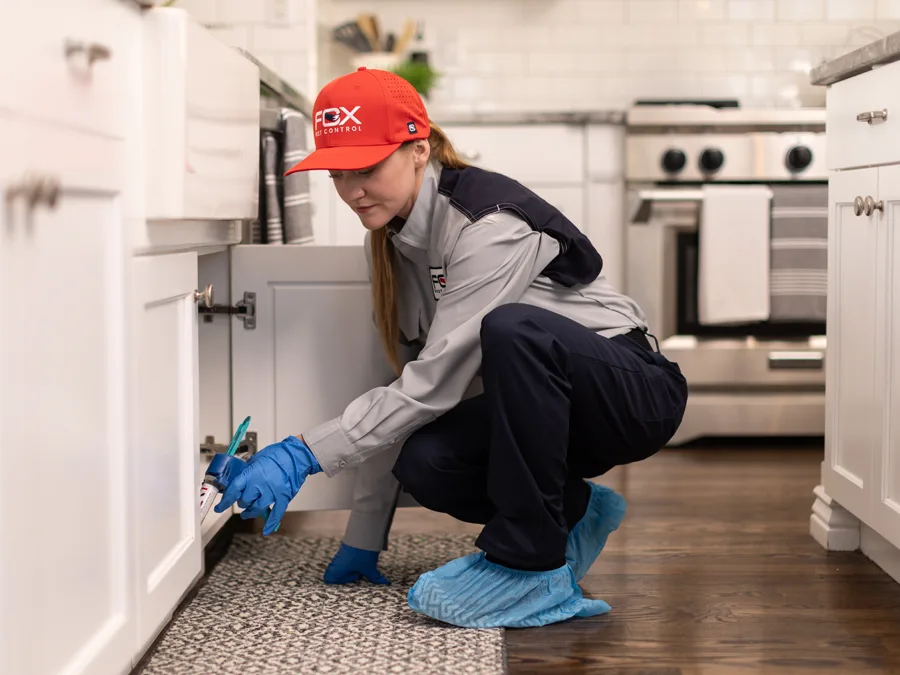
Fox Pest Control technician inspecting kitchen for pests

Fox techs are experts at evicting your tiny tenants.

To ensure our customers’ safety, all Fox Pest Control technicians undergo a thorough screening process and complete extensive classroom training, along with ongoing on-the-job mentoring with an experienced technician.

The easiest way to get rid of wasps.

Got wasps nesting where they don’t belong? Call Fox Pest Control! We’re experts in wasp control and know exactly how to handle these territorial pests. Our reliable treatments will eliminate wasps and protect your home and yard from future invasions. With our Home Protection Plan, you can enjoy peace of mind knowing your space is always protected.

1

Schedule with Fox

Call Fox Pest Control today for a free inspection: (855) 953-1976.
Call before 2 pm and get same-day service.

Remote locations and other conditions may require next-day service.

2

Treatment

A certified technician will inspect your property and provide customized pest control treatment based on their findings.

3

Follow Up

Each service provides a detailed report and helpful tips to keep pests away. We return regularly throughout the year, increasing protection with every visit.

Hamilton Allen Ph.D., BCE

Certified Entomologist, Fox Pest Control

Wasp Facts


Size: 1/3rd to 1”
Number of legs: 6
Wings:
2 pairs
Bites or stings: yes
Color: varies by species, but usually yellow with black and brown
Carry disease: no
Damages home/yard: no
Most active season: spring & summer
Fox plan for this pest: Home Protection Plan

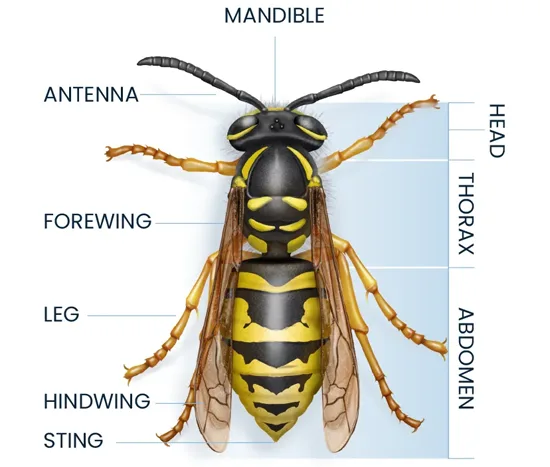
What do wasps look like?

Wasp Anatomy Diagram

There are thousands of species of wasps in the United States.

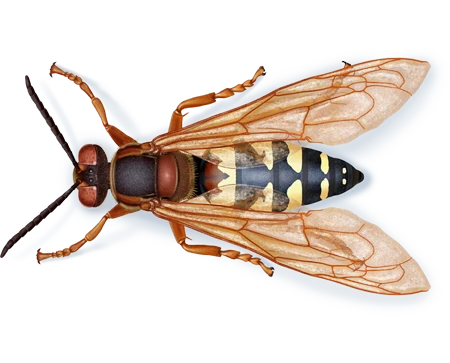
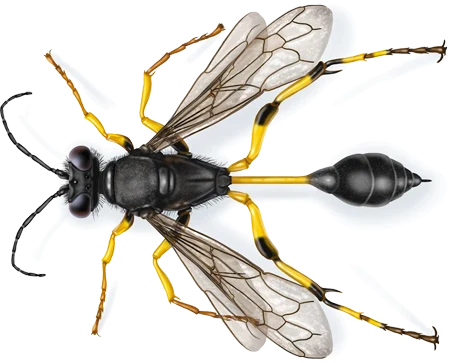
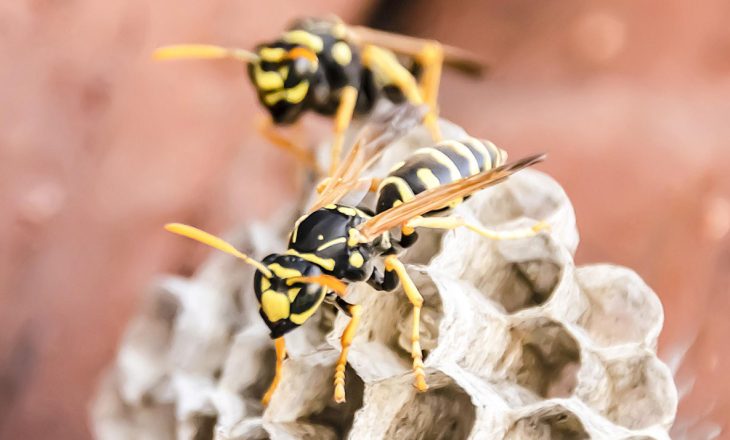
They are divided into two primary subgroups: social and solitary. There are only about a thousand species of social wasps, including yellowjackets and paper wasps, which are formidable colony builders. The rest are solitary wasps who do not form colonies. Cicada killers and tarantula hawks are two well-known solitary species.

Social wasps form colonies with a structured hierarchy consisting of a queen, workers, and sometimes drones.

As a group, they build a nest and defend it. These wasps sting as a defensive tool. In a typical wasp colony, there are the following:

  • Queen: The queen wasp is the founder and leader of the colony. She is responsible for laying eggs, which hatch into worker wasps. The queen also secretes pheromones that help support the social order within the colony.
  • Workers: Worker wasps are sterile females tasked with various duties within the colony. They forage for food, build and support the nest, care for the queen’s offspring (larvae), and defend the colony. Worker wasps are the most numerous members of the colony and play a crucial role in its functioning.
  • Drones: In some species, male drones are present within the colony. Their primary purpose is to mate with new queens from other colonies. Drones typically do not engage in other colony activities and may die shortly after mating.

While wasps are valuable predators, they can also be aggressive when they feel threatened or when their nests are disturbed.

Social wasps, such as paper wasps, can release alarm pheromones to signal other members of the colony to attack perceived threats.

In colder regions of the US, social wasp colonies typically die off in the winter, except for the overwintering queens.

These queens seek shelter in protected locations, such as under bark or in attics, and appear in the spring to prove new colonies.

Wasps employ a variety of hunting techniques to catch prey.

Some species, like mud daubers, paralyze spiders and store them in mud nests as food for their larvae. Others, such as potter wasps, capture caterpillars and other insects to provision their nests.

To expand your knowledge of these stinging insects, explore our Wasp Pest Files—a valuable resource offering insights into wasp behavior, nesting habits, and safe, effective control strategies.

Pests that can be confused with wasps.

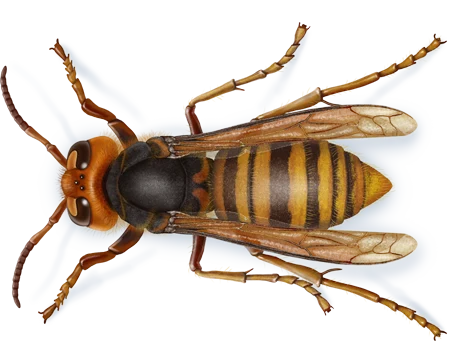
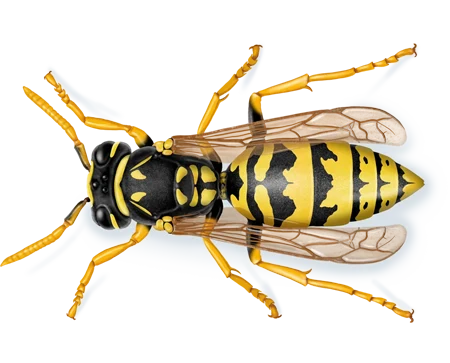
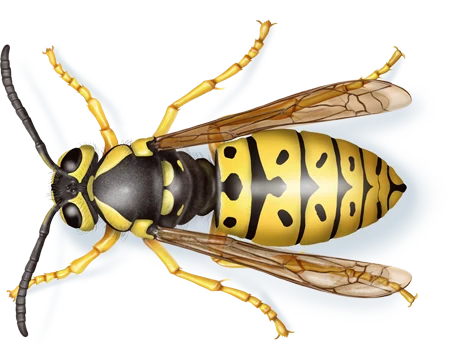
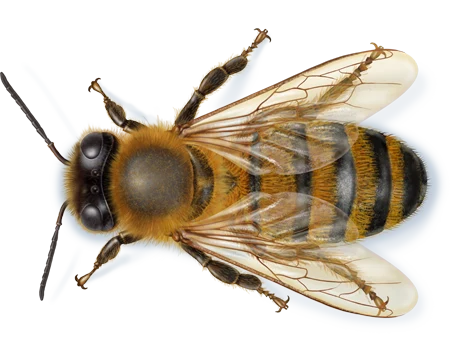
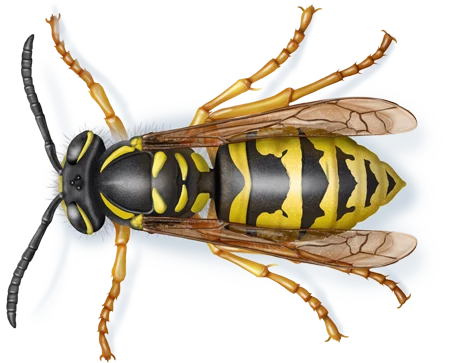
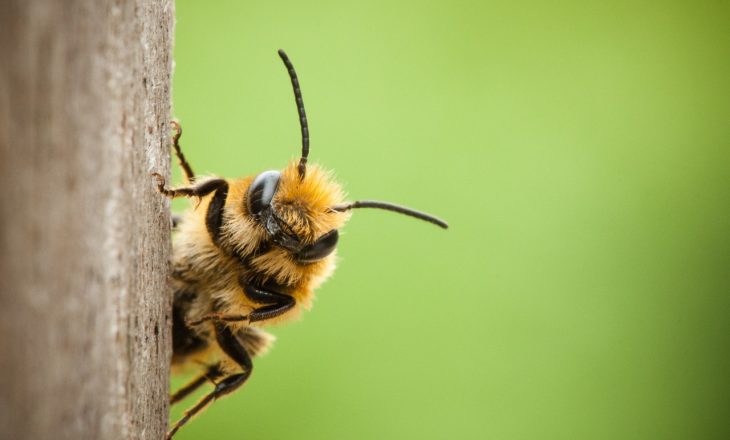
Bees are often confused with wasps due to their similar appearance and behavior. Robber flies and hover flies can also be confused as wasps or bees.

Bee

Hornet

Wasp

Yellowjacket

You might already know for sure that you have an wasp problem. Here are a couple of the most common signs of wasp infestation.

If you notice a higher number of wasps flying around your property, especially around specific areas like eaves, bushes, or trees, it could indicate a nearby nest.

Look for umbrella-shaped nests with honeycomb-shaped chambers in sheltered locations such as under eaves, in trees, bushes, or even underground.

You may hear buzzing sounds coming from areas where wasps are nesting, especially if the nest is located inside your home or in a confined space.

Wasps may exhibit aggressive behavior if they feel threatened or if their nest is disturbed. Watch out for wasps repeatedly flying towards people or pets, which could indicate a defensive response from the colony.

In some cases, wasps may cause damage to property while building or expanding their nests. Look for signs of chewed wood, paper, or other materials near potential nesting sites.

Seal entry points

Avoid nest disturbance

Maintain landscaping

Keep garbage sealed

Keep outdoor food/drinks covered

Use wasp traps

People like us.
Pests don't.

4.72 Average | 45,000+ Reviews

Bryan A.

I could not be more pleased with our initial home treatment today! Vincent arrived on time and was extremely thorough in his explanation of the services he performed. He was very polite, respectful of our inside spaces, and had a great attitude throughout the visit. A++ professional! Thank you!

Kayla B.

Overall - very satisfied with communication and job done for my first time ever hiring pest control. Very knowledgeable and explains everything. Makes it very easy to maintain for a super busy family like ours.

Fox Guarantee: We Come Back for Free!

    What type of property do you need help with?

    Are you a current customer?


    By clicking the checkbox, I am providing my eSign signature and consent to Fox Pest Control contacting me at the number above for marketing purposes including through the use of automated technology, SMS/MMS messages, and prerecorded and/or artificial voice messages (including AI generated messaging).  I acknowledge my consent is not required to purchase and I can connect with Fox Pest Control without providing consent by calling 833-667-3785. Message frequency may vary, and message & data rates may apply. Reply 'STOP' to unsubscribe. Reply 'HELP' for help. I also agree to the Fox Pest Control Privacy Policy and Terms of Use.

    Fox Pest Control technician talking to female customer

    Wasp FAQs

    What do wasps eat?

    Wasps are carnivorous insects, which means they primarily feed on other animals. Their diet typically consists of various insects, including flies, caterpillars, spiders, and other small invertebrates. Wasps hunt this prey to provide protein for themselves and their offspring.

    In addition to hunting other insects, some wasps may also consume nectar and other sugary substances for energy. This sugary diet is often more common among adult wasps, while protein-rich prey is essential for developing larvae.

    Overall, wasps play an important role in controlling populations of pest insects, making them beneficial predators in many ecosystems. However, their carnivorous nature can also bring them into conflict with humans, especially when they build nests in or near human dwellings. If you see a wasp nest near your home, don’t risk getting rid of it yourself. Call Fox Pest Control today! We have the expertise in wasp nest removal and will take care of your home safely and effectively.

    Do wasps pollinate?

    Wasps can accidentally help with pollination when they visit flowers for nectar. While they can transfer pollen between flowers as they move around, they are not as effective as bees, which actively collect pollen. Wasps mainly focus on hunting insects for food rather than pollinating. So, while they play a small part in pollination, they’re not as important as bees or other specialized pollinators.

    Are wasps aggressive?

    Yes, wasps can be very aggressive. Wasp venom has alarm pheromones that alert other wasps to danger. When a wasp stings, it releases these pheromones, making nearby wasps more aggressive in defense of the colony. This collective response helps protect the nest and can pose risks to humans and animals. Understanding this role of pheromones is crucial for safely managing encounters with wasps and avoiding defensive behavior.

    Do wasps die after they sting you?

    No, wasps do not die after stinging you. Unlike honeybees, which have barbed stingers that become lodged in the skin and cause the bee to die after stinging, most species of wasps do not die after stinging. Wasps have smooth stingers that allow them to sting repeatedly without harming themselves.

    When a wasp stings, it can withdraw its stinger and sting again if it feels threatened or perceives a danger to its nest. This ability to sting multiple times makes wasps more formidable in terms of defense compared to bees. It’s essential to exercise caution around wasps to avoid getting stung, as their stings can be painful and may cause allergic reactions in some individuals.

    If you have wasps around your home and want to protect your family, call Fox Pest Control today! Wasps are included in our Home Protection Plan, which means we’ll take care of them safely and efficiently. We are so confident in our ability to take care of your wasp problem that we guarantee your satisfaction. If the wasps do come back, we come back for free!

    How long do wasps live?

    The lifespan of a wasp can vary depending on factors such as species, environmental conditions, and the time of year. In general, adult worker wasps typically live around 12-24 days. However, the lifespan of a queen wasp can be longer, ranging from several months to a year or more. Drones (males) generally have the shortest lifespan, as their primary purpose is to mate with queens, after which they often die.

    What are wasp nests made of?

    Wasp nests are typically made of a papery material that the wasps create by chewing wood fibers and mixing them with their saliva. This papery substance hardens into a sturdy material that forms the structure of the nest. Wasps use this material to build their nests in various locations, such as trees, bushes, under eaves, or even underground. The appearance and size of the nest can vary depending on the species of wasp and the location where it is built.