Free Inspections & EstimatesSame Day Service

Get Tick Control Near You

Tell ticks to take a hike.

Feel comfortable in your home. Let Fox Pest Control take care of your tick problem.

Same Day Service

Free Inspections & Estimates

Satisfaction Guaranteed

Fox Pest Control technician inspecting kitchen for pests

Fox techs are experts at evicting your tiny tenants.

To ensure our customers’ safety, all Fox Pest Control technicians undergo a thorough screening process and complete extensive classroom training, along with ongoing on-the-job mentoring with an experienced technician.

The easiest way to get rid of ticks.

Ticks got you worried? The best way to handle them is knowing how they behave and using that to your advantage. At Fox Pest Control, we know how to deal with ticks and have all the right tools to get the job done. We’re so confident in our tick control that we guarantee you’ll be happy with the results. If you’re still seeing ticks after a treatment, just give us a shout, and we’ll come back for a free re-treatment. That’s the Fox Guarantee!

1

Schedule with Fox

Call Fox Pest Control today for a free inspection: (855) 953-1976.
Call before 2 pm and get same-day service.

Remote locations and other conditions may require next-day service.

2

Treatment

A certified technician will inspect your property and provide customized pest control treatment based on their findings.

3

Follow Up

Each service provides a detailed report and helpful tips to keep pests away. We return regularly throughout the year, increasing protection with every visit.

Hamilton Allen Ph.D., BCE

Certified Entomologist, Fox Pest Control

Tick Facts


Size: 8 – 15 mm
Number of legs: 8
Wings: no
Bites or stings: yes
Color: grayish, brown, black, reddish-brown, yellow (variable)
Carry disease: yes
Damages home/yard: no
Most active season: year-round, but more during summer
Fox plan for this pest: Yard Enjoyment Plan

What do ticks look like?

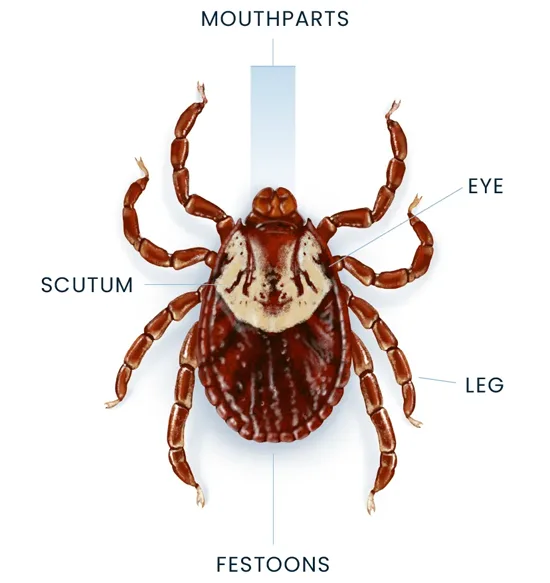
Tick Anatomy Diagram

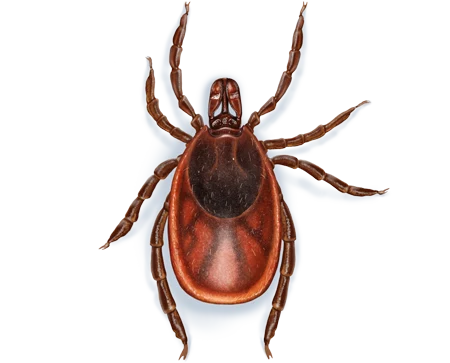
Black Legged Tick

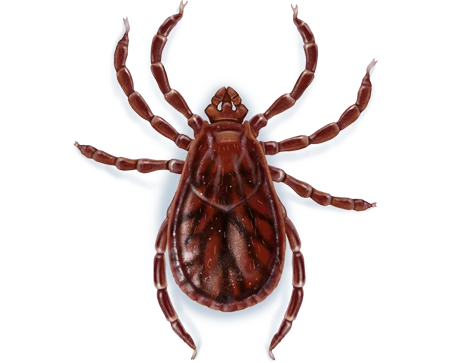
Brown Dog Tick

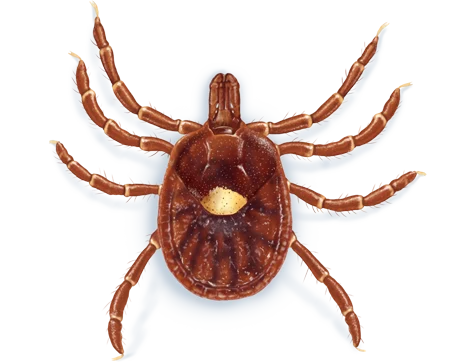
Lone Star Tick

American Dog Tick

Ticks belong to the arachnid family, which includes spiders and scorpions.

They are ectoparasites, meaning they live on the outside of their hosts, and feed on the blood of mammals, birds, reptiles, and sometimes amphibians.

There are over 900 species of ticks worldwide.

They are classified into two main families: Ixodidae (hard ticks) and Argasidae (soft ticks). Hard ticks have a hard, shield-like structure on their backs, while soft ticks lack this feature.

Ticks have four life stages:

Egg, larva, nymph, and adult. Most species require blood meals at each stage to molt and develop into the next stage.

Ticks are carriers for various diseases.

These including Lyme disease, Rocky Mountain spotted fever, tick-borne encephalitis, and babesiosis. These diseases can be transmitted to humans and animals through tick bites.

Ticks exhibit a behavior called questing.

They climb to the tips of grass, shrubs, or other vegetation and extend their front legs, waiting to latch onto passing hosts. They detect hosts by sensing vibrations, changes in temperature, and carbon dioxide.

To learn more about these tiny but potentially dangerous pests, explore our Tick Pest Files—a detailed resource covering tick species, their role in disease transmission, and effective prevention and removal strategies.


Pests that can be confused with ticks.

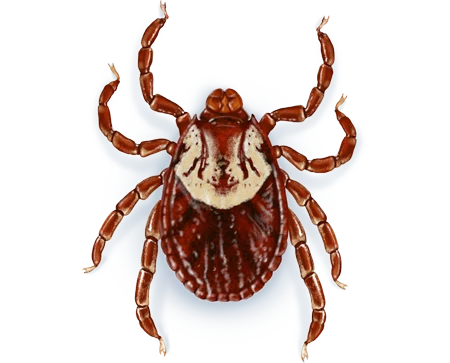
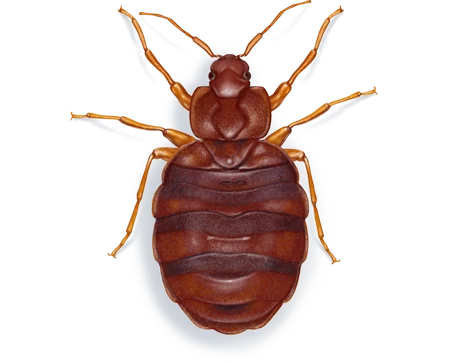
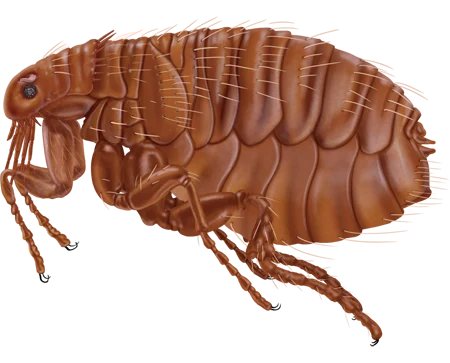
People often confuse several other insects with ticks, especially chiggers, lice, bedbugs, and fleas.

Bed Bug

Flea

Tick

You might already know for sure that you have an tick problem. Here are a couple of the most common signs of tick infestation.

Finding ticks attached to yourself, family members, or pets is a clear sign of a potential tick infestation. Ticks commonly attach themselves to dark, moist areas of the body, such as the groin, armpits, scalp, and behind the ears.

If you consistently find ticks on yourself, family members, or pets, especially after spending time outdoors in tick-prone areas, it could signal a larger tick population in the surrounding environment.

Tick nymphs are smaller and harder to spot than adult ticks but still transmit diseases. Finding tick nymphs in your environment suggests an established tick population.

Pets that spend time outdoors may inadvertently bring ticks indoors, indicating a potential tick infestation in the outdoor areas they frequent.

Use insect repellent

Wear protective clothing when outdoors

Stay on hiking trails

Perform tick checks after being outdoors

Keep grass cut short

People like us.
Pests don't.

4.72 Average | 45,000+ Reviews

Bryan A.

I could not be more pleased with our initial home treatment today! Vincent arrived on time and was extremely thorough in his explanation of the services he performed. He was very polite, respectful of our inside spaces, and had a great attitude throughout the visit. A++ professional! Thank you!

Kayla B.

Overall - very satisfied with communication and job done for my first time ever hiring pest control. Very knowledgeable and explains everything. Makes it very easy to maintain for a super busy family like ours.

Fox Guarantee: We Come Back for Free!

    What type of property do you need help with?

    Are you a current customer?


    By clicking the checkbox, I am providing my eSign signature and consent to Fox Pest Control contacting me at the number above for marketing purposes including through the use of automated technology, SMS/MMS messages, and prerecorded and/or artificial voice messages (including AI generated messaging).  I acknowledge my consent is not required to purchase and I can connect with Fox Pest Control without providing consent by calling 833-667-3785. Message frequency may vary, and message & data rates may apply. Reply 'STOP' to unsubscribe. Reply 'HELP' for help. I also agree to the Fox Pest Control Privacy Policy and Terms of Use.

    Fox Pest Control technician talking to female customer

    Tick FAQs

    Do tick bites itch?

    Even though tick bites might sometimes look a bit red, they usually don’t hurt or make you itch right away. If yours does itch, don’t worry – itching isn’t a sign of Lyme disease. It’s more likely just your skin reacting to the bite, and it can last for a few days or even weeks. If the itching is really bad, it might be because you’re allergic to the tick bite. Most tick bites take about two weeks to get better, and any redness should go away even quicker, usually within a day or two. If you’re worried about a tick bite, it’s best to see a doctor just to be safe.

    Do ticks fly?

    No, ticks do not fly. Unlike mosquitoes, which can fly, ticks cannot fly or jump. Instead, ticks use a behavior called “questing” to find hosts. They climb to the tips of grass, shrubs, or other vegetation and extend their front legs, waiting to latch onto passing hosts. Ticks detect hosts by sensing vibrations, changes in temperature, and carbon dioxide emitted by animals or humans. Once a suitable host brushes against the vegetation, the tick grabs onto it and begins feeding.

    Do ticks jump?

    No, ticks do not jump. Unlike fleas, which can jump long distances, ticks cannot jump. Instead, ticks use a behavior called “questing” to find hosts. They climb to the tips of grass, shrubs, or other vegetation and extend their front legs, waiting to latch onto passing hosts. Ticks detect hosts by sensing vibrations, changes in temperature, and carbon dioxide emitted by animals or humans. When a suitable host brushes against the vegetation, the tick grabs onto it and begins feeding.

    Where do ticks live?

    Ticks are found throughout the United States, but their distribution can vary depending on the species and local environmental conditions. Some common species of ticks found in the US include:

    • Blacklegged Tick: Also known as the deer tick, this species is found predominantly in the northeastern, mid-Atlantic, and north-central regions of the US, including states like New York, Pennsylvania, New Jersey, Maryland, and Wisconsin. Blacklegged ticks are known vectors of Lyme disease.
    • American Dog Tick: Widely distributed throughout the eastern, southeastern, and midwestern regions of the US, including states like Florida, Texas, Ohio, and Illinois. American dog ticks can transmit Rocky Mountain spotted fever and tularemia.
    • Brown Dog Tick: Commonly found throughout the US, particularly in warmer climates and indoors. Brown dog ticks can transmit diseases like Rocky Mountain spotted fever and canine ehrlichiosis.
    • Lone Star Tick: Found primarily in the southeastern and eastern regions of the US, including states like Georgia, North Carolina, Tennessee, and Missouri. Lone star ticks can transmit diseases such as ehrlichiosis, tularemia, and Southern tick-associated rash illness (STARI). Alpha Gal Syndrome, or AGS, is a serious, potentially life-threatening allergic condition that can come from the Lone Star Tick. It is also referred to as red meat allergy or tick bite meat allergy. AGS symptoms can occur after people eat red meat. Learn more about this condition on the CDC Website.

    These are just a few examples of tick species found in the US. It’s essential to be aware of tick activity in your local area and take preventive measures to reduce the risk of tick bites and tick-borne diseases.

    One of the best things you can do for your family is sign up for the Fox Pest Control Yard Enjoyment Plan. We treat your yard every month from April – October (or year-round in southern states), dramatically reducing your risk from mosquitoes, ticks, and fleas. Call today!

    Are ticks arachnids?

    Yes, ticks are arachnids. Arachnids are a class of joint-legged invertebrate animals that include spiders, scorpions, mites, and ticks. As adults, they all have eight legs and a segmented body. Ticks belong to the order Parasitiformes within the class Arachnida, along with mites.

    If you’re ready to take back your yard, call Fox Pest Control today. Our Yard Enjoyment Plan program is designed to greatly reduce the mosquito and tick population within your yard, and our success rate increases with each and every visit! As long as our control products are applied on a routine schedule, you should see a very high reduction in the pest population.

    What do ticks eat?

    Ticks are blood-feeding ectoparasites, which means they feed on the blood of mammals, birds, reptiles, and sometimes amphibians. Ticks require blood meals to complete their life cycle and develop from one stage to another. When a tick attaches to a host, it inserts its mouthparts into the skin and feeds on the host’s blood. Ticks typically feed for several days before detaching from the host and dropping off to molt into the next life stage or laying eggs.

    Our Yard Enjoyment Plan is specially crafted to significantly decrease the tick population in your yard. With each visit, our success rate grows! Stick to our treatment schedule, and you’ll notice a significant reduction in pests.

    Which ticks carry Lyme disease?

    The primary tick species known to carry and transmit Lyme disease in the United States are the blacklegged tick in the northeastern, mid-Atlantic, and north-central regions and the western blacklegged tick along the western coast. These ticks are commonly referred to as deer ticks.

    It’s important to note that not all ticks of these species are infected with the bacterium Borrelia burgdorferi, which causes Lyme disease. The transmission of Lyme disease occurs when an infected tick bites a human or animal and transmits the bacterium through its saliva during feeding.

    Take charge of your yard today by reaching out to Fox Pest Control. Our Yard Enjoyment Plan is tailored to minimize the tick population in your yard. With each visit, our success rate climbs, leading to great results. Consistent treatment with our control products guarantees a substantial decrease in the pest population. Call today!

    Do ticks die in the winter?

    No, ticks don’t die off in winter. Instead, they go into a dormant state to preserve energy when the temperature consistently averages below 35 degrees Fahrenheit (around 1.6 degrees Celsius). When the ground thaws and the temperature rises above freezing, they wake up and start feeding again. Wearing protective clothing and checking for ticks on warmer winter days can lower your chances of getting bitten.