Welcome to Fox Pest Control’s ultimate guide on Bees! Whether you’re dealing with an infestation or just curious about these tiny creatures, we’ve got all the information you need. From facts and types to behaviors and treatment options, this guide covers it all. Let’s dive in!
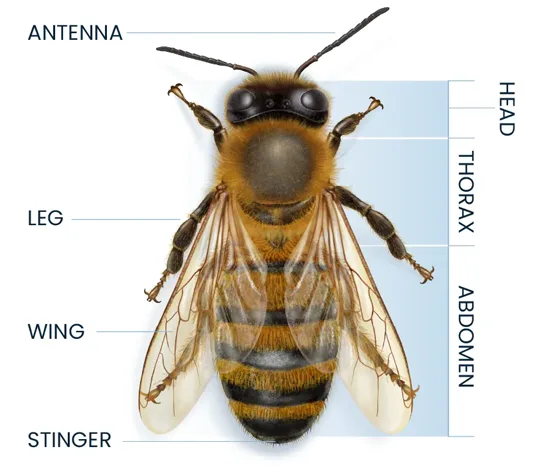
What Do Bees Look Like?
How Many Bees Are There in the World?
Did you know that there are over two trillion bees in the world? That’s right! These tiny buzzing insects are everywhere, working hard to pollinate plants, make honey, and keep ecosystems thriving. With over 20,000 different species of bees worldwide, they play a crucial role in food production and biodiversity. While their numbers may sound huge, bee populations are actually declining due to habitat loss, pesticides, and climate change. And, interestingly enough, out of that 20,000 species, there are only about 8 of them that are honey bees. What does that mean exactly? We’re going to answer that in just a minute. First, let’s learn a little more about which species you’re most likely to find near you.
The Most Common Bee Species in the U.S.
With so many species buzzing around in the world, only 4,000 of those call the United States home. But don’t worry—you’re not likely to run into all of them! The most common bees you’re likely to spot include:
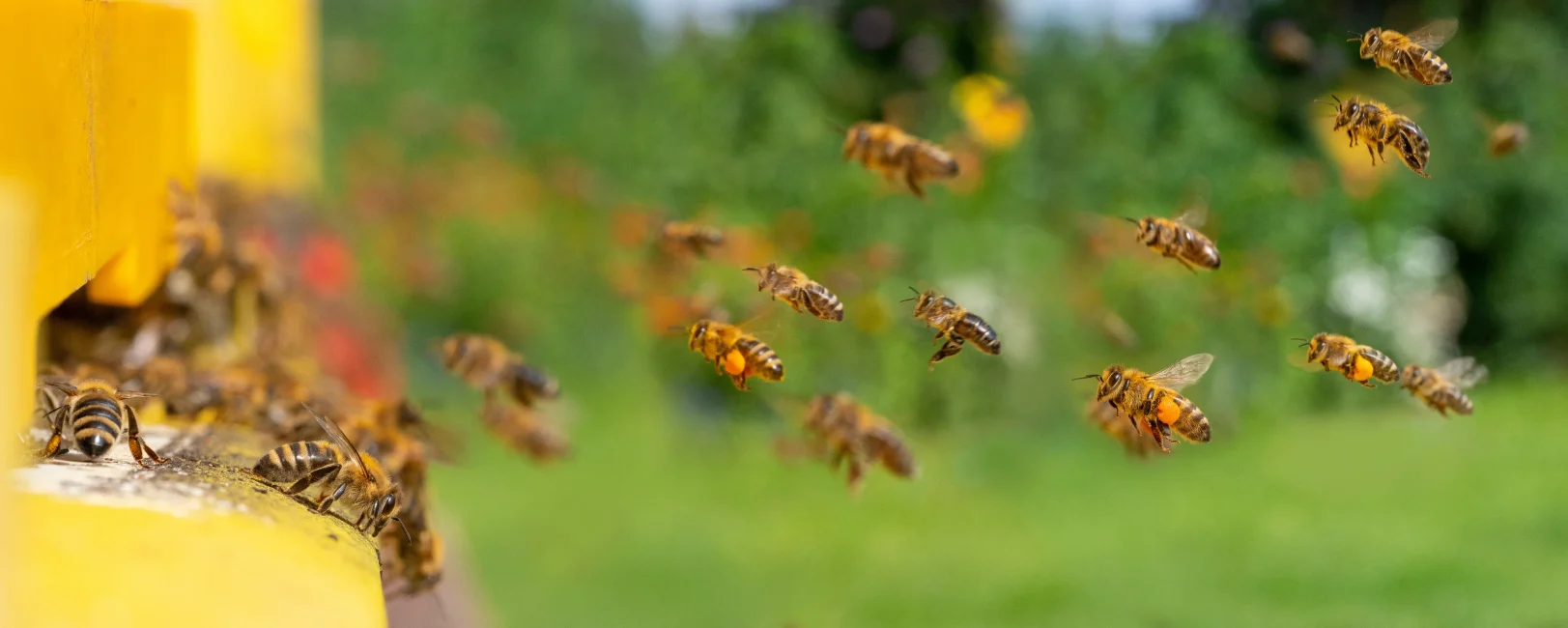
- Honey bees (Apis mellifera): These are the well-known honey producers that live in large colonies.
- Bumblebees (Bombus spp.): Fuzzy, friendly, and excellent pollinators, these bees are social and live in small colonies.
- Carpenter bees (Xylocopa spp.): These solitary bees can be mistaken for bumblebees but are larger and can drill holes in wood.
- Sweat bees (Halictidae family): Tiny metallic-colored bees that are attracted to human sweat for its salt content.
- Mason bees (Osmia spp.): Hardworking pollinators that build their nests in small holes or cracks.
Bees Have Been Around for a Really, Really Long Time…
Bees have been buzzing around for about 120 million years! That means they shared the planet with dinosaurs. Over time, they evolved into the efficient pollinators we know today. Scientists believe that bees originated from wasps that switched from hunting other insects to collecting pollen for food. Fossil evidence suggests that bees have been crucial to plant evolution, helping flowers spread and diversify.
Do Bees Bite, Sting, Damage Property, or Spread Disease?
Bees are incredibly important pollinators, but they sometimes cause concern when they show up near homes. While some species can sting, chew through wood, or carry pests that affect other bees, they generally don’t pose a major threat to humans—especially if left alone. Here’s what you need to know:
Biting and Stinging: Should You Worry?
Bees aren’t naturally aggressive, and most would rather focus on collecting nectar than picking a fight. However, they will defend themselves if they feel threatened.
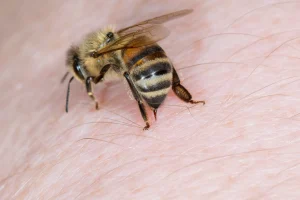
- Honey Bees: These bees have barbed stingers, meaning they can only sting once before dying. Because of this, they’re usually reluctant to sting unless absolutely necessary—like if their hive is in danger.
- Bumblebees and Carpenter Bees: These species have smooth stingers, which means they can sting more than once. However, they’re usually docile and won’t sting unless provoked.
- Do Bees Bite? Most bees don’t bite humans, but some species, like stingless bees, will nip at threats since they lack stingers. Carpenter bees also have strong jaws, but they use them for burrowing into wood, not biting people.
How to Avoid Getting Stung:
- Stay calm—bees react to sudden movements.
- Avoid wearing bright colors or strong perfumes, which can attract them.
- If a bee lands on you, don’t swat! It’ll usually fly away on its own.
Damage to Property: Are Bees Wrecking Your Home?
Most bees aren’t destructive, but there’s one exception: carpenter bees. Unlike termites, they don’t eat wood, but they do drill perfectly round holes to create nesting tunnels. Over time, a large carpenter bee infestation can weaken wooden structures, like decks, railings, and siding. You can learn more about carpenter bees here.
Do Bees Spread Disease?
Bees don’t typically spread diseases to humans, but they can carry parasites, bacteria, and viruses that affect other bees. Some major threats include:
- Varroa mites – Tiny parasites that weaken honey bees and spread viruses.
- Nosema – A fungal infection that affects a bee’s digestive system.
- Colony Collapse Disorder (CCD) – A mysterious phenomenon where worker bees abandon the hive, often linked to multiple environmental stressors.
Protecting bee populations from disease is a big concern for beekeepers and conservationists. If you see a struggling hive, it’s best to contact a local beekeeper or pest control professional who specializes in humane bee removal.
Bees can sting, carpenter bees may drill into wood, and they can carry pests—but overall, they’re not out to cause trouble. In fact, they’re one of nature’s hardest workers, keeping flowers blooming and food growing. Giving them their space and protecting their habitats helps both people and pollinators thrive!
Have a bee problem that needs fixing?
Life Cycle of Bees
Bees have four main stages in their life: Egg, Larva, Pupa, and Adult. Let’s break it down:
- Egg: The queen bee starts the whole process by laying tiny, tiny eggs inside special wax cells or tunnels. These eggs are super small, so you’d have to squint to see them!
- Larva: After a few days, those little eggs hatch into tiny, squiggly larvae (kind of like baby worms). These larvae need a lot of food to grow, so the worker bees feed them with a special bee “milk” until they’re strong enough to move on to the next stage.
- Pupa: Now the real transformation begins! The larvae spin a silky cocoon around themselves and enter the pupal stage. This is when they start changing into their adult bee form. Think of it like a bee version of a caterpillar turning into a butterfly—pretty amazing, right?
- Adult: After spending some time in the cocoon, the bee finally breaks free, fully grown and ready to take on its job in the colony. Some bees will help take care of the hive, others might go out to collect pollen, and the queen just keeps laying eggs to start the process all over again!
The Roles of Adult Bees: Who Does What in the Hive?
In a bee colony, there’s a clear hierarchy with each bee playing an important role. Let’s meet the stars of the show!
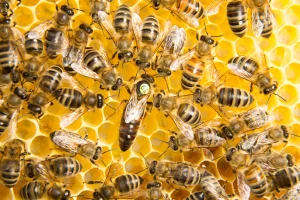
1. Queen Bee: The Royal Leader
The queen bee is the heart and soul of the colony. She’s the ruler—the only female bee capable of laying eggs. Her job? To lay thousands of eggs every day to keep the colony growing and thriving. The queen is usually surrounded by worker bees who take care of her needs, like feeding and grooming her. She’s treated like royalty! She’s also the only one who can produce the special scent (pheromones) that helps keep the colony together and running smoothly.
2. Worker Bees: The Hard Workers
Worker bees are the female bees in the hive, and they do just about everything. They’re the real busy bees of the colony, performing a variety of jobs that help the hive survive and stay strong. Here are just a few of the things worker bees do:
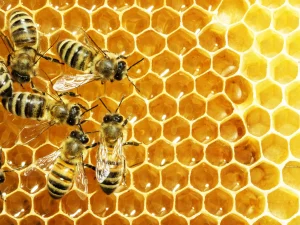
- Building the Hive: They create and maintain the wax honeycombs where all the magic happens. These hexagonal cells store honey and pollen and house the larvae and pupa.
- Foraging for Food: Worker bees leave the hive to gather nectar, pollen, and water. They fly around visiting flowers, using their long tongues to collect nectar, which they bring back to the hive to make honey.
- Feeding Larvae: Once the queen lays her eggs, worker bees take care of the larvae, feeding them special bee food (royal jelly, pollen, and nectar) to help them grow.
- Protecting the Colony: Worker bees also act as the defenders of the hive. They protect it from predators like bears and other threats, using their stingers to defend the queen and the hive. But don’t worry, they only sting when they really have to!
3. Drone Bees: The Reproductive Guys
Drones are the male bees in the colony, and they have one main job: to mate with the queen. They’re kind of like the colony’s bachelors, and they don’t do much else around the hive. Drones don’t gather food, build the hive, or take care of the larvae—they just wait for mating season. When the time comes, drones leave the hive in a big “mating flight” to find a queen to mate with. Unfortunately, once their job is done, drones are kicked out of the hive as the weather cools down, and they don’t survive the winter. It might sound harsh, but that’s just the way the hive works!
A Little Hive Hierarchy
In the hive, the queen is in charge, but the worker bees really make everything run smoothly. The drones don’t have much power—they’re there just for reproduction. The worker bees do have a big responsibility, and they follow the queen’s pheromones to help maintain order in the hive. Together, all three types of bees create a well-organized colony with each bee knowing exactly what to do. It’s like a perfectly tuned machine!
Isn’t it fascinating how each bee has such a special role? Each one’s contribution is vital to the hive’s success. Without the queen, there would be no eggs; without the worker bees, the hive would fall apart; and without the drones, the colony wouldn’t be able to reproduce. It’s a pretty incredible system!
Mistaken Identities: Lookalike Insects You Might Confuse with Bees
Bees are pretty well-known for their buzzing and important pollination work, but they aren’t the only flying insects that share similar looks. Sometimes, people mistake other insects for bees, but there are some key differences that make it easy to tell them apart. Let’s take a closer look at a few common bee lookalikes that might have you doing a double take!
1. Yellowjackets: The Aggressive Cousins
Wasps and yellowjackets are often confused with bees because they both have that “flying insect” vibe. But here’s the key difference: wasps and yellowjackets are more aggressive and have smooth bodies, while bees have hairy, fuzzy bodies. The smooth body of a wasp helps them fly faster, and they’re also more likely to sting without much warning, especially if they feel threatened. Unlike bees, wasps can sting multiple times without dying, making them a little scarier!
Yellowjackets are a type of wasp, and they are especially aggressive in late summer and fall when they’re defending their nests. If you see one, don’t get too close—they tend to swarm in defense of their territory.
2. Hoverflies: The Master of Disguise
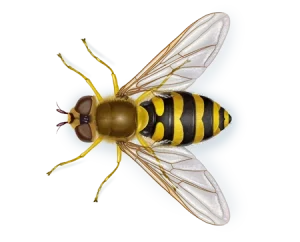
Hoverflies, or flower flies, are harmless little guys that are often mistaken for bees because of their yellow and black striped patterns. However, hoverflies are actually flies, not bees, and they have only one pair of wings, unlike bees, which have two pairs. They’re called “hoverflies” because they can hover in place as they feed on nectar from flowers. They don’t sting and are actually great for your garden since they help pollinate plants just like bees do!
Hoverflies have developed their bee-like appearance as a defense mechanism. By mimicking the look of a bee, they scare away predators who think they might get stung. Pretty clever, right?
3. Hornets: The Big, Bold Bee Lookalikes
Hornets are a type of wasp and are larger than regular bees. They belong to the wasp family, and while they share some similar physical traits with bees (like having black and yellow coloring), hornets are generally bigger, more aggressive, and tend to live in larger colonies. Hornets are known for their ability to protect their nests fiercely, so if you spot a hornet’s nest, it’s best to keep your distance.
Hornets are also known for their smooth bodies, unlike bees’ fuzzy, hairy ones. And just like other wasps, hornets can sting multiple times without dying, so they can be much more dangerous than a bee in a defensive situation.
The Key Differences to Remember:
- Bee bodies: Fuzzy and hairy, which help them collect pollen for their hives.
- Wasp/yellowjacket bodies: Smooth and shiny with more aggressive behavior.
- Hoverflies: Mimic bees but don’t sting and have only one pair of wings.
- Hornets: Larger, more aggressive, and part of the wasp family.
Next time you’re outside and see a buzzing insect, you’ll be able to tell whether it’s a bee or one of these lookalikes! While bees are our friends, it’s always good to know what’s buzzing around so you can stay safe and give them space when needed.
Have a bee problem that needs fixing?
Behavior, Diet, and Living Conditions of Bees
Bees are much more than just their busy buzzing and honey-making abilities. They have some seriously cool behaviors and skills that help them thrive in their colonies. Let’s dive into the fascinating world of bee behavior with a few things you might not know!
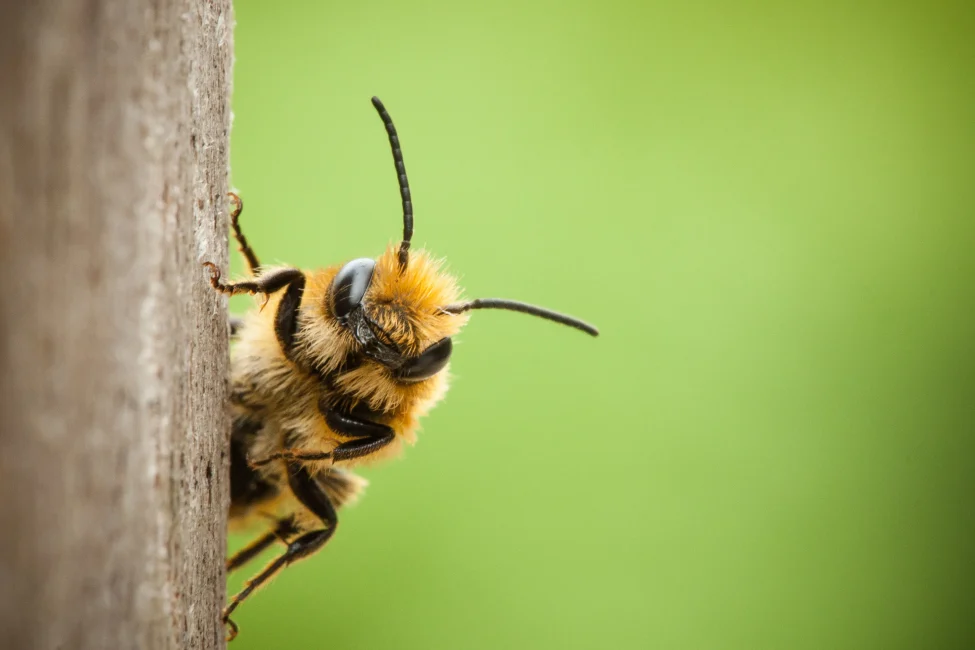
- Bees Can Recognize Faces: Bees have amazing memory and can actually recognize human faces! Studies have shown that bees can distinguish between different faces by processing visual information in a way similar to how humans do. So, if you ever get the chance to hang out with some bees (safely, of course!), they might just remember you the next time you pass by. Pretty impressive for such tiny brains!
- Bees Can See UV Light: Bees can see ultraviolet (UV) light, which is invisible to humans! This special vision helps them spot patterns on flowers that we can’t see, like nectar guides, which show bees the best places to land. Flowers often have UV patterns that guide bees directly to their nectar, making it easier for bees to do their pollination work. It’s like the flowers are glowing with invisible signals just for them!
- Bees Have a Super Sense of Smell: Bees rely heavily on their sense of smell, which is one of their most powerful senses. They use it to find flowers, identify other bees, and even recognize different scents in their environment. The smell of pollen and nectar is what draws them to flowers, while the scent of pheromones helps the queen and worker bees communicate within the hive. If a worker bee feels threatened, it can even release an alarm pheromone to warn the rest of the hive to be on alert!
- They Work as a Superorganism: Bees don’t think of themselves as individuals—they think of themselves as part of a superorganism. The entire hive works together to make sure everything runs smoothly. Each bee is dedicated to the colony’s survival, and they all have specific tasks. Whether it’s foraging, cleaning, defending, or laying eggs, every job is essential to the colony’s success. It’s a teamwork mentality that’s amazing to see in action!
- Bees Are Great at Problem-Solving: Bees have been shown to have problem-solving skills that rival other animals. In fact, bees can learn to navigate mazes and solve complex puzzles to get rewards, like food. They’ve also been observed using tools—like using leaves to block holes in their hives. They may be small, but their brains are capable of incredible thinking!
- Bees Have a Lifespan of Just Weeks to Months: Most worker bees only live for a few weeks during the warmer months, as they work themselves to the bone gathering nectar and pollen. Queen bees, on the other hand, can live for several years, which is why they’re so crucial to the hive’s success. The lifespan of a bee depends on its role, and the life of a worker bee is short but incredibly productive.
- Bees Can “Play”: Some researchers believe that bees may be capable of play. For example, they have been observed rolling balls of wax or interacting with objects in their environment without a clear purpose. This kind of behavior might be linked to problem-solving or learning new skills. It’s another example of how complex and fascinating bee minds can be!
Aren’t bees the coolest little buzzers? We know honey bees spark a lot of curiosity, so we’re diving into some of the most common questions people ask about them!
What Are Honey Bees?
Honey bees (Apis genus) might be the superstars of the bee world, but they’re just a small part of a much bigger pollination team. Known for making honey and living in well-organized colonies, honey bees come in a handful of varieties. But here’s a fun fact—only one honey bee species is actually found in the U.S.!
The Western honey bee (Apis mellifera) was brought over by European settlers in the 1600s and has been buzzing around ever since. All the other honey-making cousins live in different parts of the world. Here are a few of them:
- The Asian honey bee: Native to South and Southeast Asia; sometimes found in parts of Australia but not in the U.S.
- The giant honey bee: Yes, it’s as big as it sounds! Native to South and Southeast Asia; nests in open spaces and doesn’t tolerate domestication.
- The tiny dwarf honey bee: Found in Asia and the Middle East; too small and delicate for U.S. climates.
- The black dwarf honey bee: Native to Southeast Asia; prefers tropical environments.
- The Philippine honey bee: Found in Indonesia and the Philippines; not present in North America.
- Koschevnikov’s honey bee: These little guys are restricted to Borneo and parts of Malaysia.
- The Himalayan giant honey bee: Native to the Himalayas; famous for producing “mad honey” but not found in the U.S.
Despite their celebrity status, honey bees make up only a small fraction of the world’s bee population. Most bees don’t make honey or live in massive colonies—so who are the other 19,992+ species?
Meet the Other Bees
Most bees are solitary, meaning they work alone instead of living in large hives. Here are some of the unsung heroes of pollination:
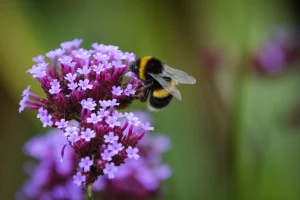
- Bumblebees (Bombus spp.) – These fuzzy, friendly bees live in small colonies and are incredible pollinators.
- Carpenter Bees (Xylocopa spp.) – Solitary bees that burrow into wood to lay eggs (sometimes mistaken for tiny lumberjacks).
- Mason Bees (Osmia spp.) – Super-efficient pollinators that use mud and natural holes to build their nests.
- Sweat Bees (Halictidae family) – Tiny, metallic-colored bees that are drawn to human sweat (but don’t worry, they’re harmless!).
- Leafcutter Bees (Megachile spp.) – They snip off pieces of leaves to build their nests—nature’s little architects.
- Mining Bees (Andrenidae family) – Ground-dwelling bees that dig burrows in the soil.
Even though they don’t make honey, these bees are crucial for pollination—often outperforming honey bees when it comes to fertilizing certain plants. So, next time you see a little bee buzzing by, remember: it might not be after your honey, but it’s still hard at work keeping our world blooming!
Why Does This Matter?
Understanding the diversity of bees is crucial because many species are facing population declines due to habitat loss, pesticide exposure, and climate change. Conservation efforts often focus on honey bees because of their economic value, but protecting all bee species is essential for supporting healthy ecosystems.
Nesting Habits of Bees
Each type of bee has its own unique way of setting up a home, and they all have their favorite spots for nesting. Let’s take a closer look at the different nesting habits of honey bees, bumblebees, carpenter bees, and mason bees.
1. Honey Bees: The Hive life
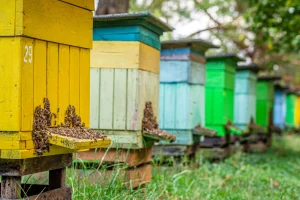
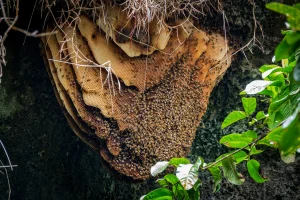
Honey bees are the ultimate team players, living in big, busy hives with thousands of other bees. They usually build their homes in hollow trees, old buildings, or even in special boxes that beekeepers set up. Inside the hive, the bees work together to make honey, care for the queen, and take care of the baby bees. The hive is like a big, organized apartment complex, with rooms (called honeycombs) for honey, pollen, and baby bees to grow!
2. Bumblebees: The Ground Dwellers
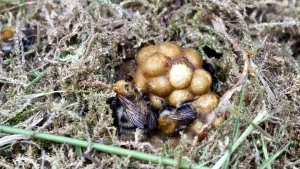
Bumblebees are a little more laid-back. They like to nest in small spaces, like old rodent burrows, under sheds, or in the ground. Their nests aren’t huge like honey bee hives—they usually have around 50 to 400 bees living in a cozy, underground home. Bumblebees use grass, moss, and pollen to line their nests, and they keep busy going in and out to gather nectar and pollen for the colony.
3. Carpenter Bees: The Woodworkers
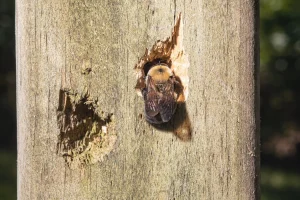
Carpenter bees are like tiny woodworkers. They love to burrow into wood—think fences, decks, or even trees! They create round holes in the wood to lay their eggs. Each hole becomes a little room where they store nectar and pollen for the larvae. Carpenter bees are solitary (they don’t live in big groups like honey bees), but they can cause damage over time by drilling into wooden structures. They don’t eat the wood; they just create homes inside it!
4. Mason Bees: The Mud Builders
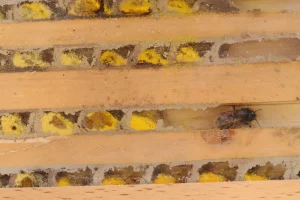
Mason bees are super creative and love to build their homes with mud! These little bees like to nest in small holes or cracks found in wood, stone, or even plant stems. After laying their eggs in a little chamber, they fill the hole with nectar and pollen, then seal it up with mud to keep the egg safe. Mason bees are solitary, meaning they live alone, but they’re amazing pollinators and are often encouraged by gardeners to help out with fruit trees and flowers.
Have a bee problem that needs fixing?
How Do Bees Communicate?
Bees might not speak the way we do, but they sure know how to communicate with each other. These buzzing creatures have some pretty cool ways to share information and keep the hive running smoothly. Let’s dive into the two main ways bees “talk” to each other.
1. The Waggle Dance
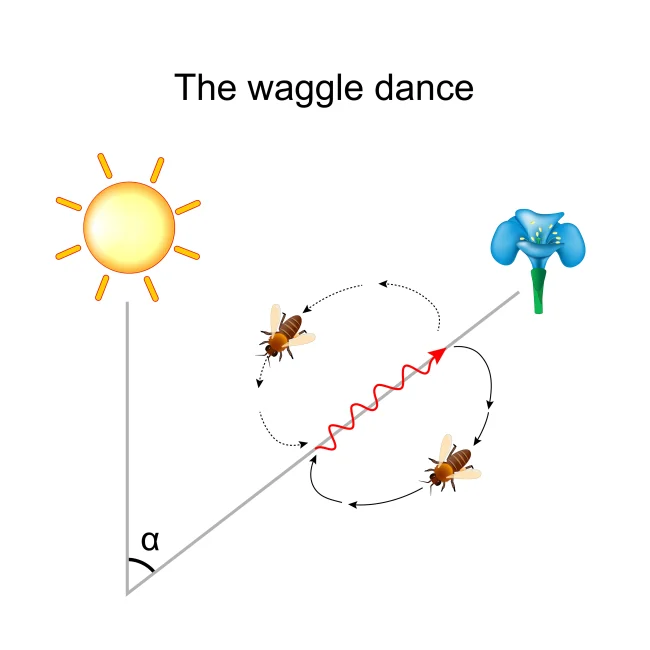
One of the most fascinating ways bees communicate is through something called the waggle dance. When a bee finds a good source of nectar, it heads back to the hive and performs a special dance to let other bees know where to find it. The dance looks like a figure-eight pattern, and the bee wiggles its body while moving in a straight line. The direction of the waggle indicates the direction of the food relative to the sun, while the length of the wiggle tells the other bees how far away the food is. It’s like a secret map made of dance moves!
2. Pheromones: Chemical Signals
Bees also use pheromones, which are chemical signals, to communicate in the hive. Pheromones are released into the air and can carry different messages depending on the situation. For example, when a bee feels threatened, it releases an alarm pheromone to warn the rest of the hive that danger is near. Other pheromones help keep the hive organized. The queen bee releases a special pheromone that tells the workers she’s around and keeps the colony’s system running smoothly. Even when bees are looking for a mate, they use pheromones to attract each other.
Bees are great at using both movement and chemicals to stay connected and keep everything in their hive organized. Whether it’s through a dance that leads others to food or sending out pheromones to keep the peace, these little creatures have developed some seriously impressive communication skills.
What Do Bees Eat?
Bees have a very specific diet to keep their energy up and their hives thriving. Here’s a closer look at what bees eat and how they gather their food.
1. Nectar: The Sweet Energy Boost
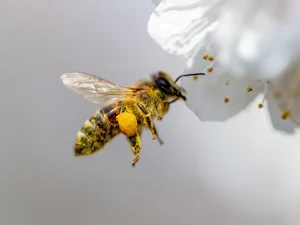
One of the main foods for bees is nectar, the sweet liquid produced by flowers. Nectar is packed with sugars, which give bees the energy they need to fly, work, and perform their famous waggle dance. Worker bees use their long, specialized tongues (called proboscises) to suck up the nectar and store it in a special “nectar stomach” that’s separate from their regular stomach. The nectar is then brought back to the hive, where it’s passed along to other worker bees and turned into honey or stored for later.
2. Pollen: The Protein Power
While nectar is great for giving bees a quick energy boost, pollen is just as important. Pollen is rich in protein and is vital for the growth and development of the bee colony. Bees gather pollen from the male parts of flowers and carry it back to the hive on their hind legs, where it’s packed into “pollen baskets.” This protein-packed food is essential for feeding young bees and ensuring the colony’s survival. Without enough pollen, the bees wouldn’t be able to grow and raise new bees!
3. Honey: A Sweet Winter Reserve (For Honey Bees)
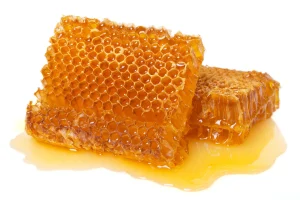
Honey is the ultimate food source for honey bees, especially when the weather turns cold. Honey bees store nectar in their hives and transform it into honey through a special process of drying and enzymatic action. This stored honey becomes the colony’s food supply during the winter months when flowers aren’t in bloom. It’s a valuable resource that helps the bees survive through colder seasons when they can’t forage.
How Do Bees Collect Their Food?
Worker bees are the busy foragers of the hive. They fly from flower to flower, collecting nectar using their long, tube-like tongues. Once they’ve sucked up the nectar, they store it in their nectar stomach and fly back to the hive. Along the way, they also gather pollen from the flowers, which sticks to tiny hairs on their bodies. When they return to the hive, they transfer the nectar to other worker bees who help process it into honey. Pollen is transported back to the hive and stored in the hexagonal cells of the honeycomb, ready to feed the next generation of bees.
Bees are like nature’s little grocery shoppers, flying from flower to flower, collecting nectar for energy and pollen for protein. Whether they’re making honey for the winter or feeding their young, bees have a carefully planned diet that keeps their colonies healthy and strong. It’s amazing how much teamwork goes into getting their meals!
Signs of a Bee Infestation
Bees are an essential part of our ecosystem, but if they decide to make your home their own, it can be a bit of a problem! If you think bees may have taken up residence in your house, here are some common signs to look out for:
- Increased Bee Activity Near Your Home: If you notice lots of bees flying around your property, especially in the warmer months, there could be a nest nearby. Bees are busy creatures, so it’s common to see them buzzing around flowers or heading in and out of a potential nest. Keep an eye on where they’re coming from—if you spot a concentrated group of bees around the same spot, it could be a sign that they’re nesting nearby.
- Visible Nests in Walls, Trees, or Eaves: Bees tend to build their nests in protected spaces like walls, trees, or eaves of your house. If you spot a hive in your attic, under the roofline, or inside a tree hollow, it’s a clear sign that you’ve got a bee colony living there. Honey bees, in particular, like to settle in enclosed spaces that are warm and undisturbed, while carpenter bees often prefer to burrow into wood. If you see a nest, be careful—these bees are just trying to do their job and shouldn’t be disturbed.
- Buzzing Sounds from Within Walls: One of the easiest signs that you have a bee infestation is the sound of buzzing coming from inside the walls or ceilings. Honey bees, for example, can make a constant hum as they work in their hive. If you’re hearing buzzing sounds, especially near an area where you suspect a hive may be, it’s time to investigate further.
- Wood Shavings (From Carpenter Bees): If you notice wood shavings or small holes in wooden structures like decks, fences, or wooden siding, carpenter bees might be the culprit. These bees are known for tunneling into wood to create nests for their eggs. They don’t eat the wood but instead burrow through it to create tunnels, leaving behind piles of sawdust-like shavings.
Have a bee problem that needs fixing?
What Can You Do About Bees
So, you saw the signs, and you know you’ve got Bees. Or, you don’t see any signs but want to make sure you don’t have a neon sign advertising a vacancy for them to move in.
Bees are helpful and important creatures, but we get it—no one wants them making themselves at home inside your walls or in other unexpected places! Fortunately, there are some simple steps you can take to help keep bees from moving in:

- Seal Cracks and Gaps: Bees love to find hidden spaces to build their nests, so one of the easiest ways to keep them out is by sealing cracks and gaps around your home. Check areas like windows, doors, and around vents, and make sure there are no tiny openings where bees could sneak in. If you spot any cracks in walls or siding, use caulk or weatherstripping to close them up. This will prevent bees from finding easy entry points.
- Keep Wood Structures Maintained: Carpenter bees love to tunnel into wood, so it’s important to keep wooden structures like decks, fences, and eaves well-maintained. Regularly inspect wooden surfaces for signs of holes or burrowing, and if you spot any, seal them up quickly. You can also use wood preservatives to make the surface less inviting to carpenter bees. If you’re building or renovating, consider using treated wood that’s less attractive to these wood-loving bees.
- Remove Attractants: Bees are drawn to nectar-rich flowers, so if you have a lot of blooming plants near your house, they might be attracting bees. While it’s great to have flowers for pollination, you can reduce the attraction by trimming back or moving plants away from your home. Additionally, clean up spills of sugary drinks or food around the house—bees will seek out sweet scents, and you don’t want them to think your porch is a snack bar!
- Install Bee Deterrents: If you’ve noticed that bees are consistently hanging around a certain area, consider installing physical barriers or deterrents. Things like mesh screens or bee-proof netting can help keep them away from areas like vents or attics. You can also hang up a fake hornet’s nest—bees tend to avoid areas where they think other colonies are already settled.
How Do I Get Rid of Bees?
While it’s totally understandable to be concerned if you have a bee problem, it’s important to remember that bees play a crucial role in our environment. They’re essential pollinators, helping plants thrive and supporting biodiversity.
The most important thing to remember is: don’t try to remove bees on your own! Bees are best handled by a professional pest control team with the right knowledge and equipment. Trained experts can safely remove or relocate a hive without harming the bees. In the case of honey bees, for example, they can often be relocated to a safe place where they can continue their important work.
If you have a bee problem it’s time to call Fox Pest Control. Our team knows exactly how to handle bee infestations and is trained to take care of them quickly and safely. When you pair the tips we’ve shared above with our Home Protection Plan, you’ll get year-round protection from bees and many other common pests. We’ll help you identify potential entry points, seal unprotected areas, and address any issues causing the infestation. Plus, our technicians undergo regular, hands-on training to ensure they’re up-to-date on the best ways to solve your bee problem.